

























































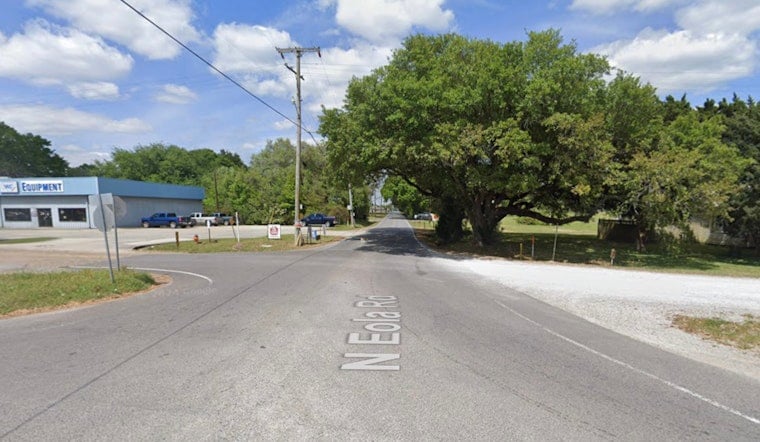
Construction crews are now working the dirt on North Eola Road in Broussard, where the new Eola Place subdivision is rising on more than 75 acres of former rural land. The site sits just outside town limits in unincorporated Lafayette Parish, but getting to this point took more than a year of permitting, a neighbor's formal appeal, and a wholesale water deal between two local governments.
The land itself changed hands in February for $3,049,490, or roughly $0.93 per square foot, when Eola Place Development LLC bought the parcel in the 100 block of North Eola Road, according to ELIFIN Realty. Photos published by NOLA.com, credited to staff photographer Leslie Westbrook, show construction work already underway on the site as of Friday.
A Long Road Through Local Government
Before any equipment showed up, the project had to clear the Lafayette Parish Planning Commission, which approved Eola Place's preliminary plat in February 2025. That approval didn't go unchallenged: an adjacent property owner appealed the decision to the Lafayette Parish Council, raising concerns about adverse impacts on the surrounding neighborhood, per records reviewed by Lafayette Consolidated Government.
Because the subdivision falls in unincorporated parish land but needs city utilities, Broussard had to step in too. The city adopted Ordinance 25-832 in August 2025, authorizing Amendment No. 5 to its wholesale water agreement with Lafayette Consolidated Government so it could supply potable water to Eola Place, according to the same source's reporting. Broussard buys wholesale water from the parish government to supplement its own municipal supply, a system the growing subdivision will now tap into.
Sewer Concerns Delayed the Water Deal
That water agreement almost didn't move as quickly as it did. Back in May 2025, residents raised concerns about sewer infrastructure and lift station maintenance, prompting Broussard's mayor to say the city would draft a resolution addressing utility upkeep before finalizing wholesale water sales for the development, the outlet's reporting notes. It's a recurring headache for fringe developments that rely on municipal systems built for a smaller population.
Flood Rules and Drainage Requirements
Environmental oversight came from multiple directions as well. The Louisiana Department of Environmental Quality issued an LPDES water discharge permit, numbered LAR10Q603, to Eola Place Development LLC in October 2025, with coverage running through October 2028, according to state permitting records. That permit governs stormwater runoff during construction, a requirement for any Louisiana project disturbing significant acreage.
Parish planning conditions went further, requiring Eola Place to set aside a 30-foot public drainage servitude along the coulee running through the site, along with one-to-one volumetric excavation mitigation for any fill placed in Special Flood Hazard Areas, according to documents from Lafayette Consolidated Government. Those flood-mitigation standards reflect broader updates to Lafayette Parish's land development rules following past severe flooding in the region. The parish also classified North Eola Road as a rural corridor under the Lafayette Transportation Plan, which waives public sidewalk requirements but still requires dedicated right-of-way extensions and traffic alignment work for the new subdivision, the same records show.
Growth Pressure Across Southern Lafayette Parish
Eola Place is landing in one of the fastest-growing pockets of Acadiana. U.S. Census Bureau estimates cited by World Atlas show Broussard's population climbed 17.5%, from 13,447 residents in 2020 to 15,799 in 2025. Parish-wide, the Acadiana Planning Commission projects Lafayette Parish's population will grow from 250,819 in 2025 to 261,186 by 2030.
Lafayette Consolidated Government has been trying to get ahead of that growth, holding public meetings this summer on an updated parish growth plan aimed at infrastructure and land-use strategy for unincorporated areas. Eola Place's path to groundbreaking, threading water agreements, sewer capacity questions, flood servitudes and a neighbor's appeal, offers a preview of the kind of coordination the parish will likely keep facing as more subdivisions push into its rural edges.




