

























































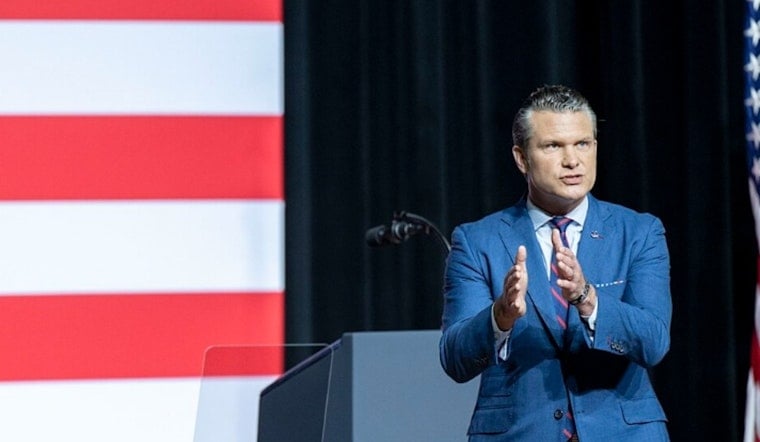
Standing among the white crosses at the Normandy American Cemetery on Saturday, U.S. Defense Secretary Pete Hegseth used the 82nd anniversary of D‑Day to sound an alarm about present‑day migration and ideology. At Colleville‑sur‑Mer, he suggested that people now arriving by sea threaten the very freedoms secured in 1944, turning what is usually a day of quiet remembrance into a flashpoint in the ongoing fight over borders and identity.
Sharp language at a solemn site
Hegseth "said that today, 'different European beaches are stormed by different dangerous ideologies,' adding, 'Beaches in Spain and Italy and Greece and Bulgaria. Boats and men arrive,'" according to The Associated Press. He pressed the point with a pointed question: "When will European capitals do something about that invasion? Or is it too late?" The language tracked closely with an administration line that has repeatedly criticized European migration and border policies.
Language echoes national security strategy
The rhetoric mirrored the White House's National Security Strategy, which warned in December that Europe faces a "real and more stark prospect of civilizational erasure" and could be "unrecognizable in 20 years," according to reporting by CBS News. Critics argue that framing migration in such terms turns a policy challenge into an existential showdown, while supporters say the tough talk is meant to push allies to do more on defense and border control.
Diplomatic blowback in London
The Normandy comments also landed at a tense moment in transatlantic politics. British Prime Minister Keir Starmer's office on Friday condemned U.S. Vice President JD Vance for blaming immigration for the killing of 18‑year‑old Henry Nowak, The Associated Press reports. Downing Street called attempts to stoke division over the case "disgraceful and completely unacceptable," underscoring how raw the politics of migration already are in the United Kingdom.
What allies are watching
Across Europe, officials have been wary of language that casts migration primarily as a security emergency, and allied governments are watching how U.S. messaging might strain cooperation on defense and technology. As reported by The Straits Times, which summarized Reuters coverage, the administration's tone has unsettled partners who worry about the diplomatic fallout.
For many veterans and attendees, D‑Day ceremonies are meant first and foremost to honor shared sacrifice. Critics say folding that history into contemporary partisan warnings risks pulling the spotlight away from remembrance. Hegseth's remarks highlighted how charged the stage has become at international memorials and may complicate outreach to European allies already wrestling with contentious debates over migration and defense spending.





.jpg)