

























































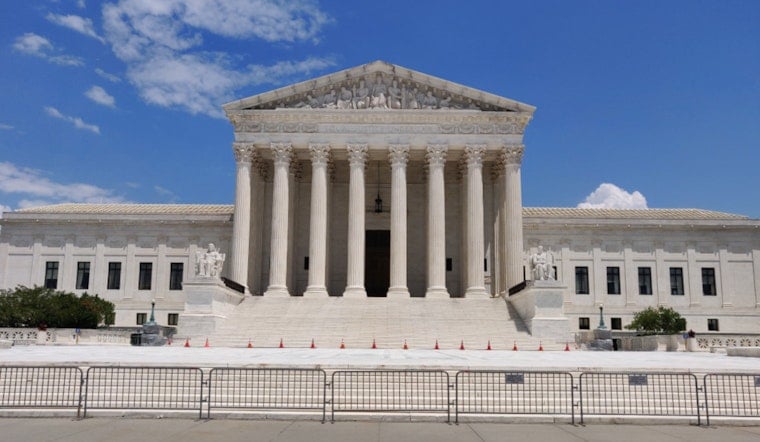
On Tuesday, June 23, 2026, the U.S. Supreme Court ruled that a former Louisiana inmate cannot recover money damages after prison officials cut his Rastafari dreadlocks while he was in custody. The justices criticized what happened to him but concluded that the Religious Land Use and Institutionalized Persons Act, or RLUIPA, does not provide a money-damages remedy against individual officials.
What Happened At Raymond Laborde
The case centers on Damon Landor, who was serving a five-month sentence in 2020 and, according to court records, was transferred late in his term to Raymond Laborde Correctional Center. There, Landor says he told intake staff he was a practicing Rastafarian and handed them both documentation and a prior appeals opinion to back that up. A guard allegedly tossed that paperwork in the trash before other guards restrained him and shaved his hair down to the scalp. Those details and the court’s description of the episode are reported by The Associated Press.
What The Court Decided
The justices blocked Landor’s attempt to sue the officers for money damages, holding that RLUIPA, a federal law designed to protect the religious exercise of people in prisons and other institutions, does not authorize individual-capacity damages in this setting. The court declined to extend the reasoning of its 2020 RFRA decision in Tanzin v. Tanvir to RLUIPA, a distinction explored in coverage and case analysis at SCOTUSblog. Lower courts, including the 5th U.S. Circuit Court of Appeals, had already expressed concern about Landor’s treatment while still concluding that the statute does not allow damages.
Justice Department And State Response
The federal government weighed in on the legal question and, according to reporting, the Justice Department sided with Landor in urging the Supreme Court to take the case. That intervention helped put the dispute on the high court’s docket. Louisiana has also acknowledged the incident and told courts it revised its grooming policy after what happened to Landor, according to The Associated Press.
Legal Implications
The ruling leaves what many see as a narrow remedial gap: courts may still step in to block unlawful policies or order other forms of equitable relief, but this decision limits the ability of incarcerated people to seek money damages from individual staff under RLUIPA. Legal analysts and filings leading up to the case wrestled with whether RLUIPA should be read in parallel with RFRA. Background on the case docket and the statutory debate is available from the Legal Information Institute’s case page. For now, policymakers rather than courts may be the more likely route for changing accountability and compensation rules in state prison systems.
Bottom Line
Justice watchers said the opinion keeps a clear statutory line between RLUIPA and RFRA, even as it highlights how courts sometimes condemn abusive conduct while concluding there is no damages remedy. For inmates, advocates and corrections administrators, the ruling shifts even more attention to policy changes and legislative fixes as the primary tools for redress and deterrence.



