

























































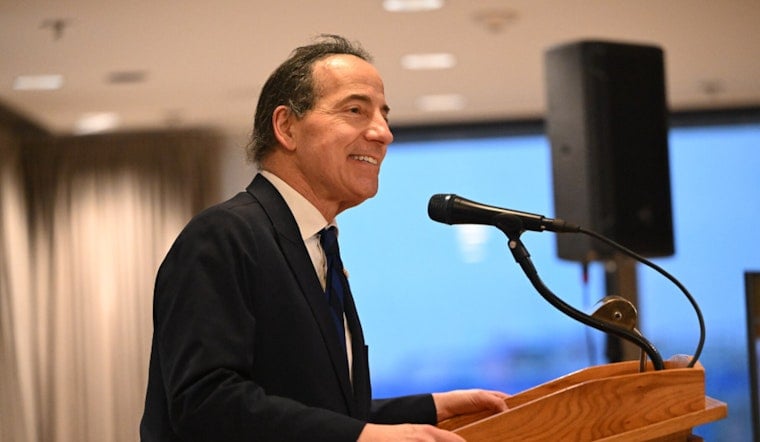
Last Wednesday, Rep. Jamie Raskin, the ranking Democrat on the House Judiciary Committee, put Harvard University and Bard College on notice, firing off letters that demand records, interviews and financial documentation tied to Jeffrey Epstein’s relationships with campus faculty and leadership. The move is the latest push in a growing congressional effort to find out whether Epstein used connections with elite universities to burnish his image and gain access to vulnerable people.
What Raskin asked for
In his letters, Raskin accused both institutions of running prior internal reviews that, in his view, “failed to fully uncover or address the extent of Epstein’s influence.” He listed a long paper trail he wants to see, including all communications with Epstein, detailed lists of gifts and payments, records of any Epstein-backed faculty research, and documents related to admissions. For Bard, he also requested the complete WilmerHale report on how the college handled President Leon Botstein’s ties to Epstein. This account of the letters and their demands was described by Inside Higher Ed.
Harvard focus: Nowak, donations and admissions
Raskin’s letter to Harvard zeroes in on faculty connections, especially the work of mathematics professor Martin Nowak and the Program for Evolutionary Dynamics, which received Epstein funding. Harvard is being asked to hand over records of any donations to faculty or programs that came in after the university formally banned Epstein gifts in 2008, as well as communications that show whether he tried to influence admissions. Raskin also wants records from students or staff who raised concerns. He set a July 1 deadline for Harvard to produce the material, according to reporting by The Harvard Crimson.
Bard and Botstein under fresh scrutiny
At Bard, Raskin directed his questions straight at the board of trustees and the college’s handling of President Leon Botstein. He argued that Bard’s WilmerHale review of Botstein’s relationship with Epstein was “too narrowly tailored” and pressed the board to turn over the full independent report, not just the public summary, and to make Botstein available for a transcribed interview. The WilmerHale summary concluded that Botstein had “minimized” parts of his relationship with Epstein, and Botstein moved to retire at the end of June after the review. Raskin now wants a broader accounting of whether those ties affected admissions, academic programming or fundraising, as detailed by Inside Higher Ed.
How the schools responded
Bard officials say they are not ignoring Capitol Hill. The college confirmed that it received Raskin’s letter and is reviewing it, a spokesperson told The Guardian. Harvard, for its part, acknowledged receipt of the request and pointed to an ongoing institutional review of Epstein-related documents. The university told The Boston Globe that it is committed to evaluating the records expeditiously. Both schools are now moving from self-directed internal reviews to answering formal questions from Congress.
Why critics say earlier probes fell short
Lawmakers and advocates say this is exactly why they are not satisfied with what universities have done so far. Previous campus reviews, including Harvard’s efforts in 2008 and again in 2019, did not fully trace Epstein’s donations or faculty contacts that are now visible in Department of Justice documents. That gap, critics argue, leaves open the question of whether Epstein’s academic ties were used to help launder his reputation. Raskin’s latest letters push for a wide ranging, document level accounting so that Congress and the public can judge the institutional choices that may have enabled abuse, a concern outlined in reporting by The Harvard Crimson.
What comes next
Raskin has given Harvard and Bard a tight turnaround for producing records and has already sent similar requests to New York University and Columbia University as part of the broader inquiry into the Epstein files. Whether the schools comply on time or force the committee to consider subpoenas will determine how far congressional investigators can dig into the role of elite campuses in Epstein’s network and what reforms, if any, might follow.





.jpg)