

























































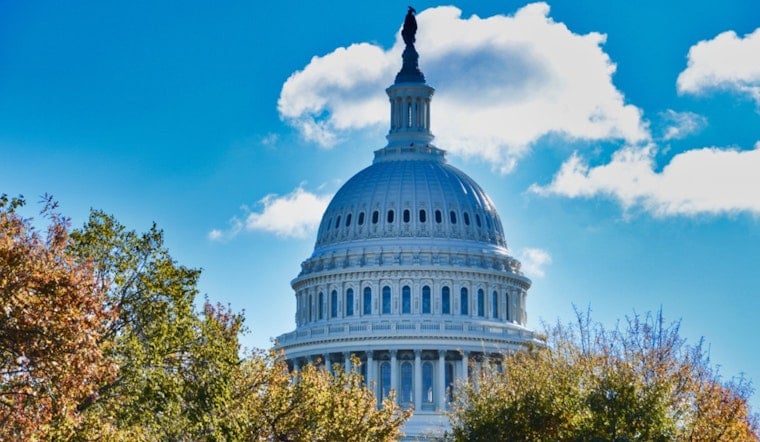
House Republicans on Wednesday muscled a constitutional amendment through the House Judiciary Committee that would permanently cap the U.S. Supreme Court at nine justices, advancing the proposal on a 15-8 party-line vote. Backers cast it as a firewall against any future "court-packing" schemes, while opponents blast it as a partisan response to recent conservative victories at the high court. The move drops one more log onto an already roaring fire over how big the Supreme Court should be and how much power it wields.
The committee vote nudged the proposal along the long constitutional path, according to Reuters. Rep. Jamie Raskin, the panel’s top Democrat, criticized the resolution as "meant to cement into place a profoundly lopsided and partisan Supreme Court," the outlet reported. Republican sponsors counter that locking the number at nine would block both parties from trying to juice the bench for short-term political gain.
What the amendment would say
The joint resolution is short and blunt. It would add a new constitutional article declaring, "The Supreme Court of the United States shall be composed of nine justices." It also includes a seven-year deadline for states to ratify the change. Under the text filed with Congress.gov, the amendment would only take effect if it first clears two-thirds of both the House and Senate and is then approved by three-fourths of state legislatures.
Where this fight comes from
The latest push arrives after an earlier, very different proposal from the other side of the aisle. In 2021, Democratic lawmakers floated legislation to expand the Court to 13 seats, arguing that additional justices could rebalance a bench they said had been tilted rightward by recent confirmations. That expansion plan, covered at the time by Axios, helped ignite the current tug-of-war over the Court’s structure.
Why proponents say it matters
Supporters of fixing the Court’s size point to a run of blockbuster opinions that reshaped national policy. In New York State Rifle & Pistol Assn. v. Bruen, the justices broadened gun-rights challenges, a shift laid out in the majority opinion posted by the Supreme Court. In Dobbs v. Jackson Women’s Health Organization, the Court ended federal constitutional protection for abortion, as detailed in the majority opinion available from the Supreme Court. Those rulings intensified calls across the political spectrum for everything from term limits to structural changes and now, from Republicans, for a permanent headcount cap.
Political reality and next steps
Even if the House signs off, the amendment faces a deliberately high bar. It would still need a two-thirds vote in both chambers of Congress and ratification by 38 states, a process spelled out in the resolution text on Congress.gov. The Court has sat at nine members since the post-Civil War Judiciary Act set the current size, a historical stretch examined in detail in a 2021 report by the presidential commission on Supreme Court reform, available in the Presidential Commission record.
For now, the proposal operates as much as a political marker as a legal blueprint. Republicans pitch it as a promise of stability that would put the Court’s size beyond the partisan food fight, while Democrats argue it would lock in the current conservative majority and supercharge future battles over judicial nominations. The next questions are whether House leaders bring the measure to the floor and, if it gets that far, whether enough statehouses are willing to weigh in on the Supreme Court’s permanent headcount.




