

























































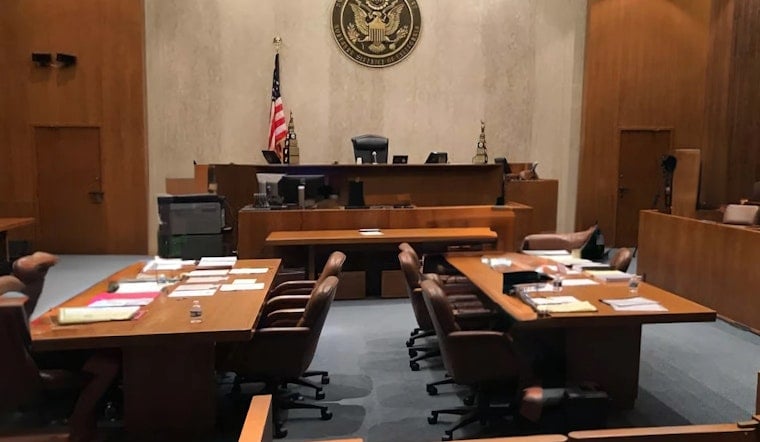
Los Angeles County District Attorney Nathan Hochman has opened a new front in his ongoing tension with the downtown criminal courts, filing a wave of peremptory challenges under California Code of Civil Procedure section 170.6 to sideline Judge Yvette Verastegui, the supervising judge of the criminal division.
The challenges bump Verastegui off a string of contested matters at the Clara Shortridge Foltz Criminal Justice Center, touching everything from a high-profile animal-cruelty prosecution to a downtown vandalism case. For a courthouse that lives on routine, it is an unusually sharp move that puts the DA's office and court leadership on a direct collision course over how serious criminal cases should be resolved before trial.
As reported by Metropolitan News-Enterprise, Hochman’s office submitted section 170.6 affidavits in a cluster of criminal cases assigned to Verastegui’s department. Prosecutors complained that Verastegui accepted open pleas and imposed sentences over their objections in the Joeboury Coleman prosecution, while charges were reduced and summary probation imposed in the Shayla Alcala matter. The filings also call out a downtown Oceanwide Plaza vandalism case and at least one matter in which prior strike convictions were dismissed before a formal trial assignment.
“We are not going to let her unilaterally come up with resolutions that we believe completely undersell a case and do additional damage to victims,” Hochman said, as quoted by Metropolitan News-Enterprise. Prosecutors are casting the 170.6 blitz as a narrow effort to protect victims' interests and preserve the office's charging decisions, not a blanket war on a particular judge.
Not everyone in the legal community is cheering. Former Los Angeles District Attorney Steve Cooley, also quoted in the same piece, called Verastegui “an excellent judicial officer” and said affidavits of prejudice “should be reserved for extraordinary circumstances.” In other words, he suggested, this is a tool that is supposed to come out of the drawer rarely, not become standard operating procedure.
About Judge Yvette Verastegui
Yvette Verastegui has served on the Los Angeles Superior Court since 2010 and is the supervising judge of the criminal division at the Clara Shortridge Foltz Criminal Justice Center, according to the court’s administration page. Before she took the bench, she worked as a deputy with the Alternate Public Defender’s office, and court biographies show she earned her J.D. at UC Berkeley School of Law.
In her supervisory role, Verastegui typically focuses on assigning trial-ready cases across downtown courtrooms. Prosecutors now argue that some recent resolutions went further than administrative triage and crossed into substantive case disposition, which is exactly where the current fight over section 170.6 has landed.
Peremptory Disqualifications And The New Limits
California Code of Civil Procedure section 170.6 lets a party file an affidavit of prejudice that, if timely and properly presented, automatically disqualifies the assigned judge. It is a powerful one-strike-and-you-are-out mechanism that usually does not require a mini-trial on motives.
That automatic quality has new caveats. The California Supreme Court's recent decision in Justia signaled that courts may examine serial or "blanket" uses of section 170.6 when there is a prima facie showing of bad faith and can order an inquiry before rubber-stamping a new judicial assignment. For offices that repeatedly move against the same judge, the ruling effectively invites scrutiny of whether they are targeting a jurist rather than responding to case-specific concerns.
What This Means For Cases And Court Assignments
If a judge or another party objects to the DA’s disqualification push, the court can hold a prompt inquiry before a different judge to sort out whether the challenges reflect good-faith concerns about prejudice or bad-faith blanket tactics. Under the California Rules of Court, the timing and format of a section 170.6 affidavit still control whether it is even considered, but judges now have more room to probe how often and why the tool is being used.
In the short term, the fallout is mostly administrative. The cases named in Hochman’s filings are likely to be reassigned while the court figures out the proper process, which can slow down already crowded criminal calendars. Behind the paperwork, though, is a larger tug-of-war over who gets to shape plea deals and sentencing outcomes in some of the county’s biggest cases.
The clash arrives on the heels of earlier public friction between Hochman and court leaders over a pilot program to test an AI clerk in criminal motions, a topic reported this spring that heightened prosecutorial anxiety about how courtroom decision-making is evolving.
For now, the filings set up an early test of the Supreme Court’s new standard in one of California’s busiest criminal hubs. Judges will be asked to walk a tightrope between the DA's objections and the protections section 170.6 was originally designed to give litigants. How quickly the individual cases move again will depend on whether the courts see Hochman’s moves as tied to specific disputes or as part of a broader pattern that warrants closer examination.





