

























































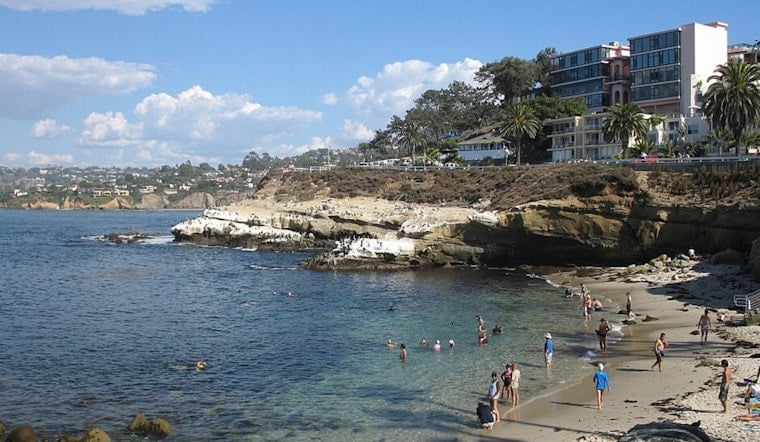
San Diego is gearing up to bring back a bacteria-based odor spray along the cliffs above La Jolla Cove, reopening one of the community’s longest-running turf wars between beachside businesses and environmental advocates.
The target is not the wildlife itself but what it leaves behind. Seabird and pinniped droppings can build up on the bluffs and send a sharp, sometimes day-long odor drifting into restaurants, shops and sidewalks below. City parks officials say the goal is to break that waste down before it becomes an all-day assault on the nose, while critics worry about what else might get caught in the chemical crossfire.
City Application And Product Details
The city’s Parks & Recreation Department has applied for a coastal development permit to let crews treat about 2,180 square feet of cliff face with BIOCAAC, a bioactive odor counteractant and cleaner sold by Ark Environmental Solutions. As reported by The San Diego Union-Tribune, the work would be paid for out of the city’s general fund, with each application of the spray estimated to cost roughly $325.
City’s Explanation And Safeguards
In a statement to Times of San Diego, city spokesman Benny Cartwright described BIOCAAC as a water-based blend of cultured, non-pathogenic bacteria and a surfactant that digests animal waste into water, oxygen and carbon dioxide. He said any new spraying would follow best-management practices.
According to city officials, treatments would be done only when conditions call for it rather than on a fixed schedule. They say on-site biological monitoring is built into the plan to avoid impacts on marine mammals that haul out in and around the cove.
Opposition And Ecological Concerns
Neighbors and conservation advocates are not sold on the idea of misting anything over a protected shoreline, no matter how benign the label sounds. They argue that the bluffs sit directly above a marine protected area, and that any misstep could have ripple effects well beyond the nose.
“Putting a chemical and biological cocktail directly over the marine protected area is a dangerous and short-sighted mistake,” La Jolla resident Eric Fletcher told attendees, according to The San Diego Union-Tribune.
Regulatory History
The San Diego Regional Water Quality Control Board asked the city in June 2023 to pause its microbial treatments while regulators examined potential effects on habitat and wildlife. In response, the city submitted product information from the manufacturer along with monitoring reports for further review.
According to the board’s April 9, 2025 Executive Officer’s Report, board staff informed the city on March 3, 2025 that spraying BIOCAAC on the bluffs is not an action the agency itself would regulate, although staff are continuing to evaluate environmental data. The report details the back-and-forth between the city and the board. It is available online from the San Diego Water Board.
How We Got Here
La Jolla’s odor drama has been unfolding for more than a decade. Microbe-based sprays and enzyme treatments were used on the bluffs through the 2010s and into the early 2020s as the community wrestled with how to balance wildlife protections with the comfort of visitors and diners.
That saga, which has included lawsuits and a steady stream of public meetings, has been chronicled extensively in local media, including coverage noted by KPBS.
Local Reaction And Next Steps
Business owners say there is nothing abstract about the problem. Restaurateurs and shopkeepers report that the smell can chase away customers on busy afternoons, and some have resorted to tactical fixes like fans to try to redirect the funk while the city works through red tape.
Megan Heine, co-owner of Brockton Villa on the bluffs, told Times of San Diego that local businesses are eager for a dependable answer, even as regulators continue to hash out environmental safeguards.
What Comes Next
If the coastal development permit application is accepted for processing, it will go through a standard Coastal Act review. That can include conditions on the work, requirements for biological monitoring and a public comment period before any spraying moves forward. For general background, the California Coastal Commission provides guidance on how coastal development permits are evaluated.
City officials say any future odor-control work at La Jolla Cove would incorporate on-site monitoring and other protections if the project ultimately wins approval.



