

























































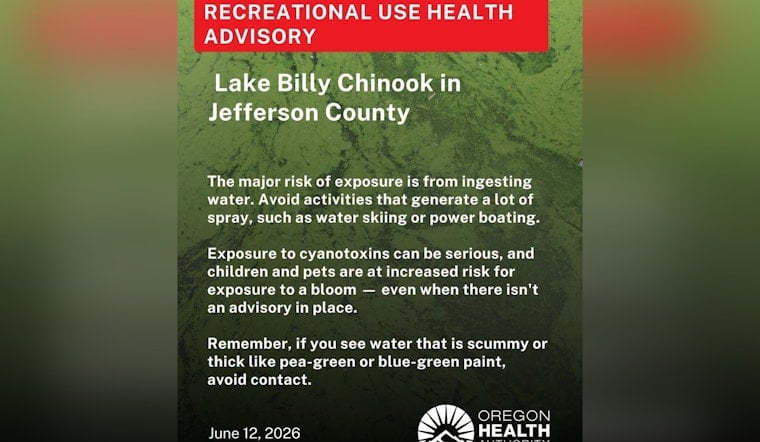
Just as summer camping and boating season kicks into gear, the Oregon Health Authority has issued a recreational-use health advisory for Lake Billy Chinook after water tests found cyanotoxins in parts of the reservoir above state safety thresholds. The advisory, posted June 12, covers portions of the lake in Jefferson County and warns people to avoid swimming and spray-generating activities in the affected areas of the popular Central Oregon spot.
What the tests showed
According to the Oregon Health Authority, Lake Billy Chinook is on its cyanobacteria advisory list after monitoring crews detected microcystin at about 15.5 µg/L, a level the state considers unsafe for swimming. The bloom is listed as visible on the advisory table, and the notice will stay in place until follow-up samples show toxin levels have dropped.
For the official advisory and status, see the state’s cyanobacteria advisories.
Health risks and exposure
Cyanotoxins such as microcystin can cause stomach cramps, diarrhea, nausea, skin irritation and, in more serious cases, neurological or liver problems in people and animals. These toxins most often affect swimmers who swallow contaminated water, and the U.S. Environmental Protection Agency warns that spray from high-speed boating can carry droplets with toxins that could be inhaled.
See guidance from the CDC and the U.S. EPA on typical symptoms and exposure routes.
How to stay safe at the lake
State health officials say to steer clear of water that looks scummy, foamy, thick like paint or pea-green, and to keep children and pets away from any area where a bloom is present, since they face higher risks of exposure. OHA notes that these toxins cannot be reliably removed by boiling or with camping-style water filters, and it recommends not eating freshwater clams or mussels from waters where blooms are present.
As outlined by the Oregon Health Authority, anyone who becomes ill after spending time in affected water should contact a health care provider and report suspected illnesses to OHA.
What this means for visitors
Perry South Campground, boat ramps and marina facilities around The Cove Palisades typically see heavy use this time of year, so visitors should expect advisory signs and possible restrictions at launch points and beaches. OHA suggests planning for alternate activities when blooms are active, including hiking, birding, shore fishing from posted safe areas or using paddlecraft at low speeds.
Local facility details are listed on Recreation.gov and in park communications.
OHA updates advisories and its interactive map frequently, so people are encouraged to check the state’s advisory table and the agency’s social channels for the latest status before heading to the water. If you were at Lake Billy Chinook recently and develop symptoms, contact your health care provider and report the illness to OHA as described in the advisory.
For the advisory map and updates, see the Oregon Harmful Algae Bloom Advisories map and the Oregon Health Authority Facebook post embedded above.





