

























































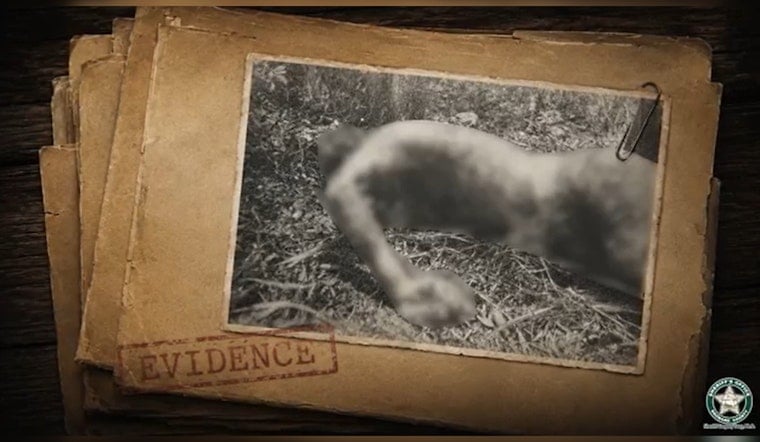
After more than half a century of questions, the Broward Sheriff’s Office says it has finally put a name to a mystery that started on a lonely dirt road near Lauderhill in the summer of 1975. Detectives have identified the partially clothed man found dead there as Robert Freese, and they are now asking the public to help them find his family as they continue to pursue the long-unsolved murder. The case went cold decades ago after early investigators came up empty on physical evidence.
According to WSVN, two people riding ATVs discovered the partially clothed body on a dirt road about four miles west of the 4400 block of North University Drive in Lauderhill. The man had no identification, investigators say, and detectives believed even then that he had been killed somewhere else before his body was left at the scene.
How investigators identified him
Detective John Curcio took on the cold case and, working with the BSO Crime Lab Latent Print Unit, managed to match a latent fingerprint to an old record that revealed the victim’s name, birthplace and a prior misdemeanor arrest in Pompano Beach, according to WSVN. Curcio summed up the emotional weight of the discovery, saying, “Somebody's been looking for their loved one for 51 years.”
How to help
Anyone who knew Freese or his family is asked to contact Det. John Curcio at 954-321-4212 or send a tip through the SaferWatch app, per the Broward Sheriff's Office. Those who prefer to stay anonymous can contact Broward Crime Stoppers at 954-493-8477 or visit browardcrimestoppers.org, which notes that tips are routed securely and that people can also dial **TIPS from any cellphone.
Old cases, new forensics
Freese’s identification is the latest example of Broward investigators revisiting cold cases from the 1970s and using modern forensic tools to crack them. The sheriff’s office has turned to DNA analysis and latent print work to revive other long-stalled cases, including a widely covered update in a 1975 double-homicide investigation. As reported by Local 10, BSO’s Cold Case Homicide Unit has leaned heavily on advances in laboratory technology to reopen files once thought unsolvable.
Detectives emphasize that finally having a name is just the starting point. They say they are counting on relatives, friends or anyone who crossed paths with Robert Freese to come forward with memories, documents or any detail that might help them figure out who killed him and move a decades-old mystery closer to an answer.



