

























































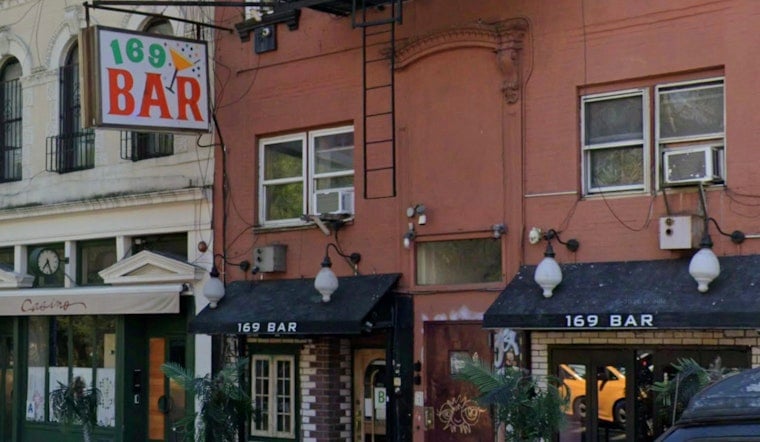
The owner of 169 Bar, a century-old Lower East Side dive on East Broadway, has gone to Manhattan Supreme Court accusing his landlord of trying to swipe the bar’s name and martini-glass logo, then reopen a lookalike in the very same space. The lawsuit asks a judge to block any transfer or reopening under the disputed marks and to protect the decades of neighborhood goodwill tied to the address.
The complaint, filed by owner Charles Hanson, claims the building’s owners and related entities have submitted federal trademark applications for the "169 Bar" name and the martini logo and have told staff they actually own the business, according to reporting by the New York Post. Hanson, who bought the bar in 2006, told the paper he believes the moves are an attempt to "steal" the brand. The complaint names the landlord’s LLCs and family members as defendants and asks the court to block use of the marks while the fight plays out.
Public records line up with key parts of Hanson’s version of events. A city community-board filing and related municipal paperwork list the business as CAFE 169, INC., with Hanson as the certificate holder, and the bar’s own website traces the location’s history and its current ownership. Those filings, along with the bar’s longstanding storefront, are the factual foundation Hanson points to in his complaint.
Trademark Filings And A Barroom Tug-Of-War
Federal trademark databases show several recent applications in 2026 for "169 BAR" and related stylized marks that are cited in the complaint. One application appears under Bar169, LLC, while another lists CAFE 169, INC. as the applicant. The lawsuit highlights those public filings as evidence that the landlord intends to control the brand and offer bar services under the same marks at the same address. Readers can dig into the application details via resources such as Justia Trademarks and USPTO.report.
Why A Trademark Fight Matters For A Neighborhood Bar
Trademark law largely turns on who the public associates with a particular name or logo. Federal registration creates presumptive nationwide rights, but courts also look at who actually used the mark in commerce first and whether any later filer acted in bad faith. Disputes like this often hinge on dates of first use, whether earlier registrations were properly kept up, and whether customers would be confused if two operators use the same name. The legal standards and examiner practices that shape those calls are outlined in the Trademark Manual of Examining Procedure and related federal guidance.
What This Could Mean For The Lower East Side
For regulars and nearby residents, the showdown is not just about paperwork. It is about who gets to claim a neighborhood institution. Profiles in outlets such as The New Yorker and long-running city listings highlight 169 Bar’s more than 100-year run at the site and its role in the Lower East Side’s social life. If the court grants the injunction Hanson is seeking, the current owner would keep control of the mark and day-to-day operations while the larger case proceeds. If the judge declines, a new operator could, in theory, open under the same familiar name in the same storefront, muddying who really owns the bar’s history.
The case is now pending in Manhattan Supreme Court and is expected to unfold over the coming months. For now, 169 E Broadway is still pouring drinks, and the neighborhood is watching to see whether a name tied to generations of patrons stays with its long-time owner.



