

























































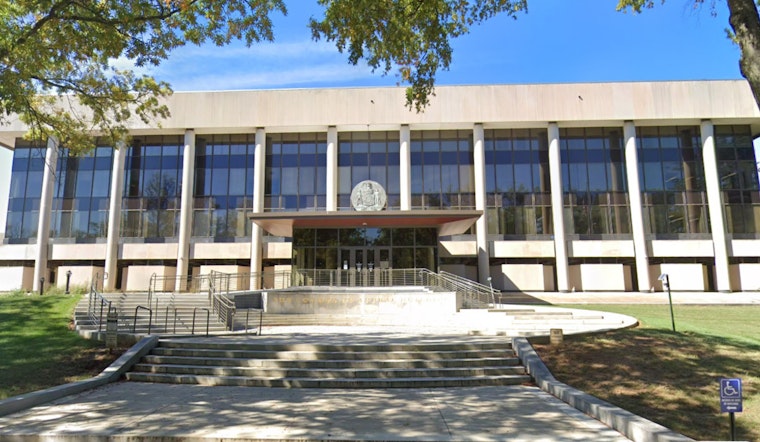
The Maryland Supreme Court has kept in place the convictions of Davinder Singh, the Gaithersburg driver who struck and killed two pedestrians as they walked to a polling place on Election Day in November 2022. In a decision issued last Tuesday, the court ruled that officers did not violate Singh’s Fourth Amendment rights when they seated him in a patrol car while investigators worked the scene, and it allowed a later breath test to remain in evidence at trial. Singh is serving an eight-year prison term after being convicted on multiple counts based on an agreed statement of facts.
In a detailed, minute-by-minute account of the morning, the Maryland Supreme Court recounted that officers reached the crash site around 7:30 a.m. and placed Singh in the back of a patrol cruiser at about 7:43 a.m. A Drug Recognition Expert removed him from the cruiser at roughly 8:51 a.m., officers formally arrested him at about 9:13 a.m., and a breath test administered at approximately 10:15 a.m. measured his blood-alcohol concentration at 0.24.
According to a Montgomery County press release, the victims were Ana Margarita Ortiz, 70, and her husband, Miguel Antonio Ortiz, 65. They were crossing near Fields Road Elementary School to vote when they were hit. County authorities say Singh was indicted in January 2023 and arrested after returning from overseas in February 2023. The collision triggered an investigation by the Montgomery County Collision Reconstruction Unit and produced a multi-count indictment that ultimately resulted in the convictions now upheld by the state’s high court.
How the Court Read Maryland's Two-Hour Testing Window
The justices interpreted Md. Code, Cts. & Jud. Proc. § 10-303(a)(2) to hold that a person is “apprehended” for testing purposes only when officers both have reasonable grounds to believe the driver is intoxicated and act on that belief, not simply when the driver is placed in a cruiser at the scene. Because the court found that Singh was not “apprehended” until the Drug Recognition Expert smelled alcohol and began sobriety testing at around 8:51 a.m., the 10:15 a.m. breath sample fell inside the statute’s two-hour window and remained admissible. That reading of the statute was central to the court’s decision to affirm the lower-court rulings.
Appeals Path and the Ruling's Scope
Singh’s motion to suppress was denied by the Montgomery County Circuit Court and later upheld by the Appellate Court of Maryland before the state’s high court weighed in, as reported by The Daily Record. The Supreme Court’s unanimous opinion, authored by Justice Angela Eaves, leaned on the “totality of the circumstances” when deciding whether an investigative detention crosses the line into a de facto arrest. The justices stressed that placing a suspect in a patrol car to shield them from a traumatic crash scene or to stabilize an unfolding investigation does not, by itself, transform an investigatory stop into an arrest requiring probable cause.
Why the Decision Matters Locally
Criminal practitioners say the ruling sharpens how Maryland courts will distinguish a Terry-style investigative stop from a full arrest, a dividing line that often decides whether key evidence survives in DUI and fatal-crash prosecutions. Legal summaries of the opinion note that the court relied on existing precedent and the plain statutory text rather than creating a new legal test, according to a Justia summary. For Montgomery County officers, the decision could shape on-scene protocols for holding drivers in patrol cars and for deploying Drug Recognition Experts.
The ruling leaves Singh’s eight-year sentence intact and keeps both the officers’ field-test observations and the 0.24 breath reading in the record. The Montgomery County public defender’s office did not immediately respond to a request for comment and the Maryland attorney general’s office declined to comment, The Daily Record reports. For the Ortizes’ family and the wider Gaithersburg community, the decision closes a painful chapter that began on Election Day 2022 and highlights the legal fault lines that often surface in fatal DUI cases.





