

























































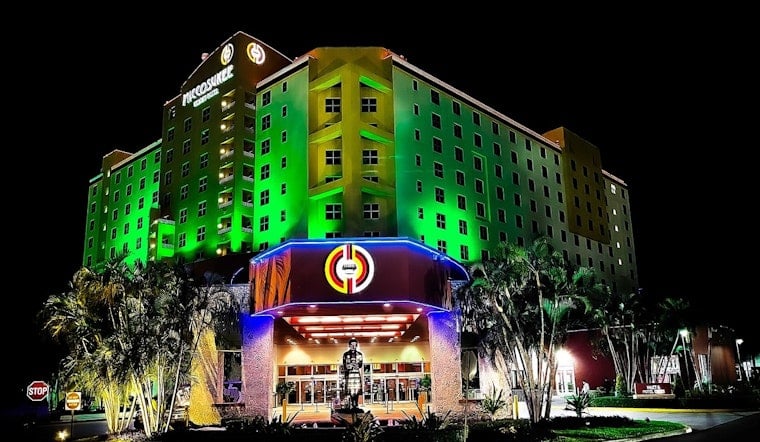
The Third District Court of Appeal on June 10 wiped out a Miami-Dade County conviction after finding prosecutors had leaned on non-existent municipal ordinances to charge conduct that happened on tribal land. The ruling clears Matias Sergio Quiroga and puts a spotlight on how far county prosecutors can, and cannot, go when cases start on reservation property.
The trouble started when Quiroga, a guest at the Miccosukee Casino and Resort on the Miccosukee Indian Reservation, grew animated while filing a complaint with staff, according to Tampa Free Press. Miccosukee police Officer Manuel Lopez ordered him back to his room and told him to place his hands behind his back. When Quiroga refused, the officer took him to the ground and handcuffed him, the outlet reports. The arrest affidavit charged disorderly intoxication under “municipal ordinance 18-18” and resisting arrest without violence under “municipal ordinance 10-10,” without saying which local government supposedly passed those rules.
Quiroga’s lawyers countered that the county court never had subject-matter jurisdiction in the first place. Florida law allows only statewide statutes, not city or county ordinances, to be enforced on reservations under Fla. Stat. 285.16. A 1994 opinion from the Florida Attorney General's office takes the same view, saying the statute covers only laws of statewide application and does not include municipal ordinances, a reading the defense leaned on at appeal.
In the opinion filed June 10, Judge Kansas Gooden wrote that “subject matter jurisdiction was not a mere technicality” and that prosecuting Quiroga under “phantom municipal ordinances” went beyond the trial court’s power, Tampa Free Press reports. The State eventually “partially confessed” the error before oral argument, and the Third DCA reversed, vacating both the conviction and the sentence.
Legal implications for tribal policing and prosecutions
The decision serves as a pointed reminder that when incidents unfold on reservations, prosecutors have to ground charges in valid statewide statutes, not in unnamed or inapplicable local codes. Tribal nations also run their own public-safety systems: the Miccosukee Tribe maintains a police force and a substation at the casino, which handle many day-to-day enforcement matters on the reservation, according to the tribe’s website. With that split in authority, jurisdiction is not just a law school exam issue, it is a live question in real-world cases.
Practically speaking, the opinion leaves prosecutors with two options: refile under an appropriate statewide statute with the proper charging papers, or walk away. Florida’s criminal procedure rules require prosecutions in county and circuit courts to proceed by indictment or information, with only narrow exceptions for municipal-ordinance cases, so any new case would have to arrive in court packaged in the correct charging document, per the Florida Rules of Criminal Procedure.





.jpg)