

























































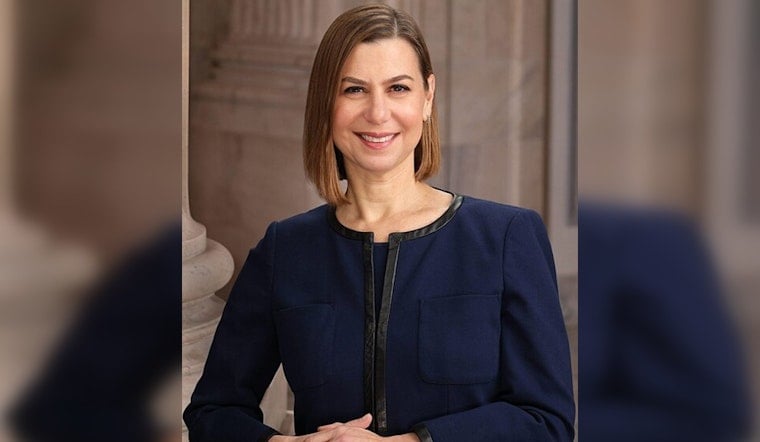
Senate Republicans on the Armed Services Committee have spiked two election-related amendments from Michigan Sen. Elissa Slotkin, brushing aside her attempt to write explicit new limits on military involvement in U.S. elections. The proposals came during markup of the Fiscal Year 2027 National Defense Authorization Act and went down on party-line votes, prompting Democratic warnings of a dangerous gray area heading into November.
In a statement posted by Senator Elissa Slotkin, the Michigan Democrat said she introduced the pair of amendments "to protect our free and fair elections from military interference and intimidation." Her office said one amendment would have barred the Pentagon from spending any money "to deploy military forces to seize ballots, voter rolls, voting machines, or other election materials," while the second would have required that Congress be formally notified before any troops headed to polling places, except when responding to armed enemies.
The New Republic reported that Republican members of the committee united to defeat the measures, and quoted Democrats, including Sen. Richard Blumenthal, describing the votes as alarming for both voters and service members. Democrats cast the amendments as a clarifying backstop to long-standing federal statutes, as well as a direct response to recent federal moves involving election records.
The fight played out against a backdrop of stepped-up federal activity around election data and materials. Legal analysts note that the Department of Justice has brought lawsuits seeking unredacted statewide voter files from multiple states, while reporting details how federal agents earlier this year seized hundreds of boxes of 2020 election documents from a warehouse in Fulton County, Georgia. Those developments became central to Slotkin’s argument that more statutory guardrails are needed. (Just Security; Georgia Recorder.)
What the amendments would have barred
Slotkin’s first amendment was written to prohibit using any Department of Defense funds to seize ballots, voting machines, voter rolls or other election materials, essentially spelling out in budget language that the Pentagon could not bankroll such operations. Her second amendment would have required the Defense Department to notify Congress before sending troops to polling places under the narrow legal exception that allows deployments only to repel armed enemies.
Her office said the language was intended to restate the existing legal norm and to shield rank-and-file service members from being forced to choose between obeying orders and potentially violating the law. The amendments, Slotkin argued in her release from Senator Elissa Slotkin, would have put clearer instructions in black and white before the next big national election.
Legal guardrails already on the books
Federal law already sharply limits the military’s role around elections. Under 18 U.S.C. § 592, it is a crime for federal officials to station or keep troops at a polling place except when necessary to repel armed enemies. A separate statute, 18 U.S.C. § 593, makes it illegal for members of the armed forces to interfere in any election. Violations can carry fines, prison time and disqualification from holding federal office. The text of those provisions is available in the federal code. (18 U.S.C. § 592; 18 U.S.C. § 593.)
What Democrats say and what happens next
Democrats on the committee framed Slotkin’s amendments as preventive medicine, not a radical rewrite of the rules. The goal, they said, was to remove any doubt that Congress, not the White House or the Pentagon, calls the shots on whether troops can be used in or around elections.
With the committee markup finished, Democrats say they plan to keep pushing the issue as the NDAA heads to the Senate floor. The New Republic reported on Democrats’ reactions and carried quotations from committee members who argued that the brief, failed vote told voters plenty about where each party stands.
The clash shows how fights over election administration, Justice Department subpoenas and criminal investigations are bleeding into defense policy this year. Whether Congress ultimately writes more explicit protections into law before the midterms is an open question, but lawmakers in both parties are already setting out positions that could shape floor debate and behind-the-scenes negotiations later this summer.





.jpg)