

























































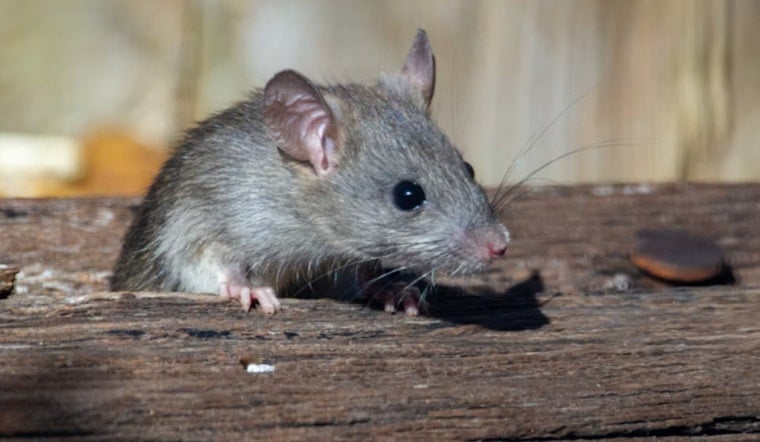
Nantucket’s postcard-perfect summers come with a nasty tradeoff: some of the highest Lyme disease rates in the country. After decades of tick-borne infections, a group of residents, clinicians, town officials and MIT-affiliated researchers are now seriously weighing an idea that sounds like science fiction, but is very real. The plan would deliberately reshape the island’s mouse population so local ticks have a much harder time picking up the bacterium that causes Lyme.
The project, called Mice Against Ticks, centers on breeding white-footed mice that are born with protective antibodies, then releasing them so they slowly replace Lyme-carrying rodents. On a small island where doctors see tick-borne disease cases every season, the effort is being framed as a community-scale public health experiment, not a lab curiosity. It has also kicked off a fresh argument over how far Nantucket should go in tinkering with its own ecosystem.
How the plan would work
The basic pitch: give the island’s most common rodents a genetic upgrade and break the Lyme transmission chain. Scientists aim to insert genes that code for protective antibodies directly into the DNA of white-footed mice so pups are born immune and pass that immunity to their own offspring. If enough immune mice are out there, fewer ticks should be able to pick up Borrelia burgdorferi, the bacterium behind Lyme, and the overall infection cycle could slow down.
The team talks about rolling this out in stages and only with local oversight, with limited releases that can be closely tracked and tweaked instead of a one-and-done islandwide drop. Background materials, technical explainers and community updates are available through the project itself at Mice Against Ticks.
Lab evidence and early results
Supporters say the lab work is starting to catch up to the ambition. Researchers recently reported that antibody genes can be stably integrated into the genome of Peromyscus leucopus (the white-footed mouse) and passed down to offspring. In controlled experiments, those engineered mice resisted infection.
Many of the authors are part of the Mice Against Ticks effort and describe the results as proof-of-concept that justifies careful, tightly monitored field tests. The methods, data and collaborative setup are detailed in a paper indexed on PubMed.
Why Nantucket is the focus
Nantucket is not just a pretty backdrop for this work, it is the point. The island has one of the highest burdens of tick-borne disease in the United States, with long-running surveys and local clinicians estimating lifetime Lyme exposure around 15 percent, according to CBS News.
Expanses of conservation land, dense deer and mouse populations and a huge seasonal influx of visitors all help ticks thrive. They also make Nantucket an unusually contained place to test a highly targeted intervention. Scientists and residents have traded pointed questions at town halls about whether such a bold move would work, what could go wrong and who would be accountable if it does. That back-and-forth has spilled onto social media and broader outlets, with the island’s debates highlighted by coverage on FOX 10 Phoenix.
Regulatory and ethical hurdles
On paper, at least, the people behind Mice Against Ticks are trying to slow-walk the effort. Their own publications and outreach stress that any release must be stepwise, driven by the community and subject to outside review. Academic discussions of the project treat governance, long-term monitoring and the possibility of reversing course as core design constraints, not afterthoughts.
The scientists argue for starting with tightly contained pilot trials and fully transparent tracking before anyone talks about larger releases, and for keeping public engagement going the whole way through. A technical discussion of the approach, including these safeguards, appears on PubMed Central.
Precautions for visitors and residents
All of this is still in the proposal stage, which means the old-fashioned advice is still the most important. Nantucket public health officials continue to hammer home prevention tips: use EPA-registered insect repellent, steer clear of brushy or wooded edges when you can, wear long sleeves and pants on hikes and check yourself, your kids and your pets for ticks after being outdoors.
Nantucket Cottage Hospital offers guidance on recognizing symptoms, getting diagnosed and starting treatment quickly. Local clinicians routinely remind visitors that antibiotics are highly effective when Lyme is caught early. Until any mouse experiment is fully vetted and completed, these common-sense moves are still the island’s best defense. Details and recommendations are available through Nantucket Cottage Hospital.
For now, the Mice Against Ticks team is focused on more lab work, more neighborhood meetings and a thicket of regulatory review before any field release would even be considered. Small, carefully bounded pilot tests are the most likely first step if the project clears those hurdles.
In the meantime, national attention, including reporting by CBS News/60 Minutes, has turned Nantucket’s local fight against Lyme into a broader debate over how far ecological engineering should go. The island, for its part, is trying to walk a narrow line, keeping up basic prevention and open conversation while it weighs whether a radical mouse makeover is worth the chance to blunt a stubborn hometown scourge.





