

























































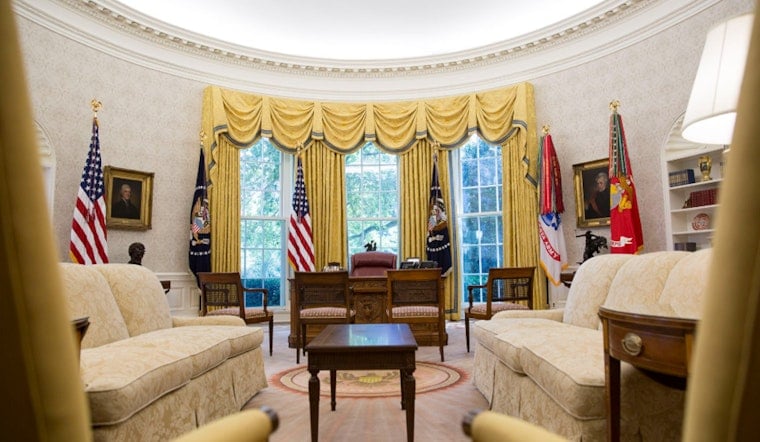
John Lees, a New Bedford scalloper and seafood business owner, took his hometown’s worries straight to the Oval Office on June 11, as the president signed a proclamation reopening large swaths of ocean to U.S. commercial fishing. Lees said he used the moment to push for regulatory changes and to plead for restored access to grounds off Georges Bank that many New England crews depend on. The move has put New Bedford’s capital-heavy scallop fleet, and the livelihoods tied to the port, squarely in the national spotlight.
Lees pressed his case inside the Oval Office
In an interview with the Boston Herald, Lees, who serves as president of the Sustainable Scalloping Fund and CEO of New England Marine, said he joined a group of commercial fishermen at the White House to witness the June 11 signing and had a brief exchange with the president. He told the Boston Herald the Sustainable Scalloping Fund represents 22 owners and about 140 vessels, and that scallop boats can cost between $3 million and $5 million while typically working roughly 35 days a year. Lees said he asked the administration for regulatory changes to how scalloping vessels are used and for help regaining access to nearly 250 miles of fishing grounds off Georges Bank.
What the proclamation changes
The White House fact sheet says the June 11 proclamation restores commercial fishing access to portions of three Pacific marine national monuments and builds on an earlier February action that reopened the Northeast Canyons and Seamounts in the Atlantic. According to the White House, the administration presents the move as a boost to U.S. seafood competitiveness and a source of new economic opportunity for coastal communities. Administration officials say existing federal laws such as the Magnuson-Stevens Act, along with enforcement, will continue to protect marine resources even as fishing access is expanded.
Regulatory hurdles could limit a quick return
Federal fisheries rules and area-specific closures still decide who can fish where. NOAA Fisheries guidance for the Atlantic scallop fishery notes that the Georges Bank accountability measure and other gear restrictions remain in place to limit bycatch, rules that can keep dredges and trawls out of certain zones even if wider monuments are reopened. Lees and other industry figures say the sea-scallop fleet is concentrated and expensive to run. He told the Boston Herald the fishery is roughly 300 full-time vessels and that predictable access is crucial for owners who have to justify multimillion-dollar boats.
Legal fights likely to follow
Environmental groups and other plaintiffs have already challenged previous reopenings of monument waters, and litigation tied to monument rollbacks is active or pending. As outlined by Just Security, cases contesting the administration’s moves on protected marine areas and proclamation authority are among the matters to watch. For New Bedford, the practical question now is whether regulatory changes and any court rulings will translate into more days at sea and steadier business for scallopers and shore-side processors.




