

























































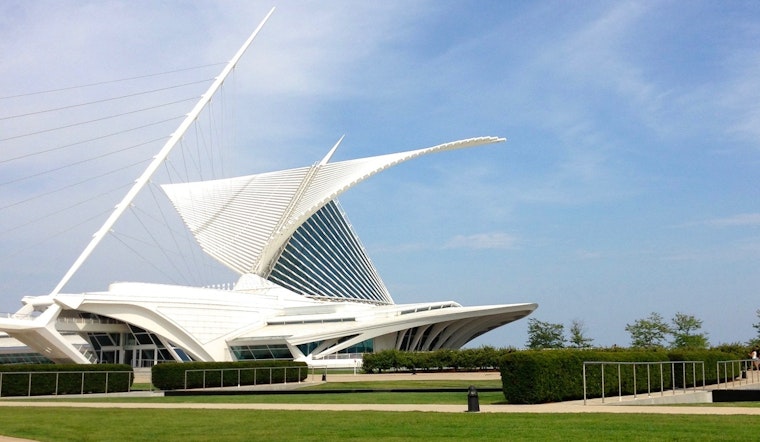
Kim Sajet is not interested in running the Milwaukee Art Museum as a pretty object on the lakefront. In her first nine months on the job, she has hammered home one core idea: a serious art museum should function like civic infrastructure, not a luxury perk. Since taking over in late 2025, she has leaned into neighborhood partnerships, public programs and artist driven projects that, she argues, can stitch the waterfront landmark more tightly into everyday Milwaukee life. Her approach is rolling out as the museum hosts a major Gertrude Abercrombie retrospective and as a flare up over a student artwork revives old tensions about politics, power and who gets heard inside museum walls.
Sajet officially started as the Donna and Donald Baumgartner Director on Sept. 22, 2025, according to a museum press release. The board selected her for what the Milwaukee Art Museum describes as deep international experience and a record of leading large exhibitions and programs. Her arrival in Milwaukee followed a rocky exit earlier that year from the Smithsonian’s National Portrait Gallery, a chapter covered by The Guardian.
She has not been shy about what she wants to change. In interviews and public forums, Sajet has argued that the museum should be “a center of creativity and innovation” instead of a place where people quietly file past objects and go home. A profile in Milwaukee Magazine notes her push away from one off blockbusters and toward longer running projects rooted in local communities. Speaking to the Rotary Club of Milwaukee on Feb. 3, she described creativity as basic civic infrastructure, not an add on, and urged the museum to team up with festivals and schools across the city to reach people who may never set foot in the Calatrava building, according to the Rotary Club of Milwaukee.
Student work and free-expression debate
One of Sajet’s first public tests came during the Scholastic Art Awards exhibition, which the museum hosted from Jan. 31 to March 15, 2026. A student painting was removed by museum staff, setting off a pointed local argument about censorship, curation and the limits of political speech in cultural spaces. As reported by the Milwaukee Journal Sentinel, Sajet later allowed the student to exhibit different works that openly criticized the museum and included phrases such as “this artist was censored by the Milwaukee Art Museum” and “free Palestine.” The episode highlighted, in very public fashion, the tension between expanding community engagement and maintaining institutional standards.
A civic museum, not a showplace
Sajet has been just as clear about where she wants the museum’s influence to land. She argues that MAM should invest in art beyond its walls, in areas such as urban planning, education and even health care partnerships, with the goal of delivering measurable civic benefits rather than just feel good moments. Reporting by WUWM notes that she favors artist led placemaking and year round programming as tools for drawing in new audiences. Her team has emphasized that longer exhibition runs, deeper work with local schools and more public commissions could create steady value for neighborhoods and funders, not just short bursts of attention.
Big shows, local tether
That theory is already being tested on the galleries’ biggest stages. The Gertrude Abercrombie retrospective, the only Midwest stop on its national tour, runs from March 27 through July 19 and is paired with programs that foreground regional artists. The museum’s exhibition page details the schedule, including member previews and public events. In interviews and internal communications, Sajet has signaled that she wants high profile shows like this to function as bridges to neighborhood work instead of one off, high cost spectacles that never connect back to the rest of the city.
Artists at the table for I-794 talks
Sajet has also pushed the museum directly into one of Milwaukee’s biggest civic debates, the future of Interstate 794. She has argued that artists and other creative professionals should be invited into conversations about possible repair, reconfiguration or removal of the lakefront roadway. According to the Milwaukee Journal Sentinel, she has floated the idea of a sculpture garden along the lakefront as one way to put art directly into the public right of way. Those suggestions would place the museum squarely in discussions that also involve transportation planners, county leaders and neighborhood groups.
Money and the public trust
The museum is not operating in a vacuum. It receives operating support from Milwaukee County, as documented in the county’s 2026 budget materials. Milwaukee County budget documents describe the museum as a partner in public cultural investment and ask departments to spell out how their work affects equity. That public backing has brought political scrutiny along with funding. Local coverage and county supervisors have pressed for more transparency following staff cuts last year and questions about executive pay, a debate over director pay and staff cuts that has not gone away.
Sajet’s basic bet is easy to state and harder to pull off: if a museum wants to act like a civic player, it has to earn public trust by delivering visible, everyday value. She has pointed to longer exhibitions, artist commissions along the lakefront and partnerships with schools and hospitals as places where that value might show up. For Milwaukee residents watching closely, the next year will reveal whether this new emphasis at MAM simply tweaks the museum’s image or fundamentally changes who shows up and what the building on the lakefront is for.





