

























































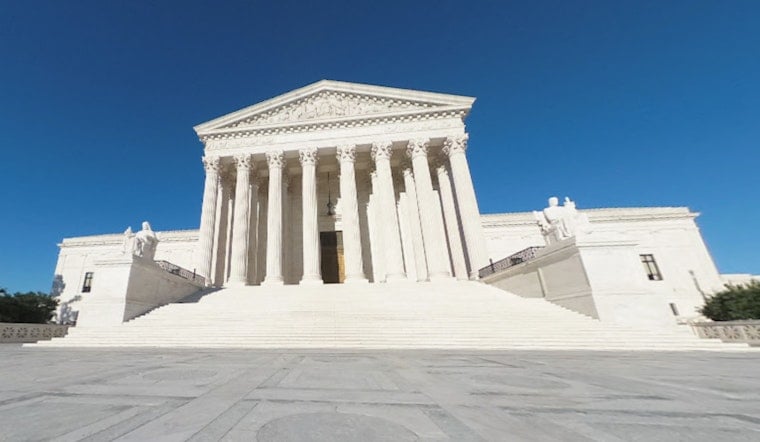
The U.S. Supreme Court is stepping into a high-stakes fight between North Dakota landowners and a natural gas pipeline operator that could reset the financial ground rules for eminent domain cases nationwide. On Monday, the justices agreed to hear a challenge from McKenzie County ranchers over how much pipeline companies must pay when they rely on federal condemnation power to run gas lines across private land. The narrow but expensive question: can landowners recover their attorneys’ fees and other litigation costs after a settlement over the value of an easement?
The dispute, Leonard Hoffmann v. WBI Energy Transmission, stems from WBI’s Line Section 27 expansion across ranchland in McKenzie County. The parties eventually settled on how much the easement itself was worth, but a federal judge later ordered WBI to cover more than $383,000 in landowners’ attorneys’ fees. The 8th U.S. Circuit Court of Appeals wiped out that award in March 2025. That reversal is now headed to the high court, and the outcome could reverberate across interstate gas projects, according to Energy Intelligence.
What the Court Will Decide
The legal fight turns on how the Natural Gas Act interacts with state property-law rules. Many states allow landowners to recover attorneys’ fees and costs when a condemning company takes them to court and they have to battle for fair market value. The 8th Circuit held that the federal statute does not authorize such fee awards in pipeline cases, effectively shutting the door on those state-law protections in its territory.
That ruling conflicts with decisions from other federal courts, creating a classic circuit split that almost begs for Supreme Court intervention. Solicitor General D. John Sauer urged the justices to take the case, while suggesting they could ultimately uphold the 8th Circuit’s interpretation to resolve the disagreement across the lower courts, as E&E News reported.
Stakes for Landowners and Developers
For landowners, the dollars at issue are not pocket change. Ranchers and their advocates argue that stripping away fee recovery would leave property owners eating years of legal bills simply for insisting on fair compensation. One attorney called that outcome a “massive wealth transfer,” shifting costs from multibillion-dollar energy companies to individual landowners, according to the North Dakota Monitor.
Pipeline developers see it differently. They warn that if state-law fee rules apply on top of federal condemnation authority, every project becomes a more expensive gamble. Allowing reimbursement of attorneys’ fees, they say, would inject uncertainty into negotiations, raise the cost of routing pipelines, and potentially slow or reshape future projects.
Timeline and Next Steps
The Supreme Court added the case to its docket on Monday, with arguments expected next fall and a decision likely by early summer 2027, according to E&E News. For now, the landowners have cleared the first and hardest hurdle: convincing the justices their dispute is worth the Court’s limited time.
“At this stage of the proceedings, the only question is whether the Supreme Court is going to hear the ranchers’ case,” Institute for Justice attorney Robert McNamara said in the group’s announcement, which noted the Solicitor General’s brief supporting review, according to the Institute for Justice. With that question now answered, both sides will spend the coming months refining their pitches to the justices.
Legal Implications
If the Court rules for the landowners, state law would control whether attorneys’ fees can be recovered in federal pipeline condemnation proceedings. That shift would likely strengthen landowners’ bargaining power, while also increasing the price tag and risk calculations for future gas-line projects.
If the justices instead agree with the 8th Circuit’s approach, pipeline developers using federal condemnation authority could avoid picking up landowners’ legal bills. Observers say the Court appears ready to settle this legal tug-of-war and resolve the split among federal appeals courts, as Bloomberg Law noted.
Either way, the case has the full attention of ranchers, energy companies, and regulators far beyond North Dakota. The ruling will help determine who pays the true cost of laying pipelines across private land. We will update this page as the parties file their briefs and the Court sets an exact argument date.





