

























































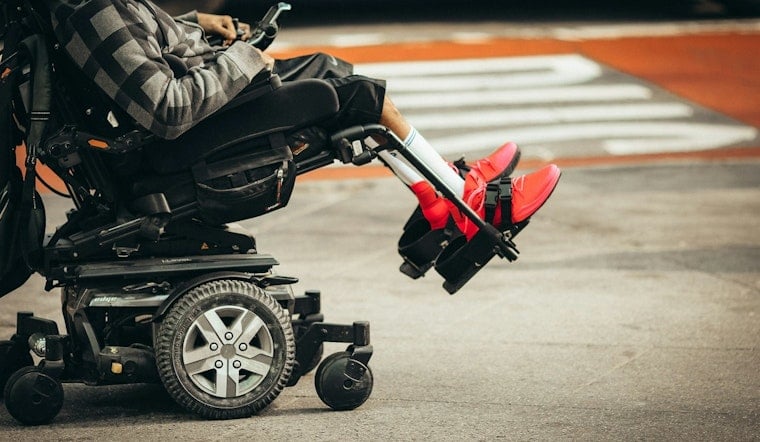
Northwestern University researchers say software they built in Evanston is now quietly sitting inside one of Apple's splashiest new accessibility features, a Vision Pro tool that lets people steer powered wheelchairs using only their eyes. The Project DRIVE team created a Wheelchair Digital Interface that converts Vision Pro gaze signals into drive commands for compatible chairs, and Apple has previewed the capability as part of a batch of accessibility updates expected later this year.
According to Apple's Newsroom, Vision Pro's precision eye tracking is designed to provide "a responsive input method" for compatible alternative drive systems, with a U.S. launch planned first for Tolt and LUCI setups. Apple says the feature can hook into those systems over Bluetooth or through wired accessories, and that its eye tracking is built to hold calibration across different lighting conditions. The company is framing the update as one piece of a wider slate of accessibility upgrades powered by Apple Intelligence.
Local reporting by Crain's Chicago Business first spotlighted the collaboration between Apple and Northwestern, noting the university's role in turning research code into a production grade interface. Northwestern and its partners say Project DRIVE's open Wheelchair Digital Interface, or WDI, lets new assistive inputs plug into existing commercial drive systems instead of rebuilding controllers from scratch. That plug in model appealed both to Apple and to drive system manufacturers that already embed safety features in their hardware.
How Project DRIVE Fits In
In a university statement, Northwestern described Project DRIVE's software as the connective tissue between a user's gaze and the wheelchair's controller. Speaking to Northwestern Now, Project DRIVE lead Brenna Argall underscored why that matters: "Often, as a person’s motor impairment increases in severity, their ability to operate the very machines designed to assist them decreases." The project, supported in part by the National Science Foundation, worked with partners including LUCI and LifeDrive Mobility to validate the WDI before Apple moved to integrate it.
Who Benefits and What's Still Unknown
Clinicians and users who do not have reliable hand control could see real gains from a gaze driven option, particularly if it proves safe and intuitive outside the lab. The early rollout, however, will be tightly focused. Apple's first wave is limited to specific alternative drive systems, and the total price tag for a qualifying setup, Vision Pro headset plus compatible drive conversion, is still an open question. Coverage through private insurers or Medicare and Medicaid has not been announced, and analysts point out that users will need sufficient, stable gaze control to operate the system effectively, according to reporting by Next Reality.
For Northwestern and for Chicago's broader assistive technology ecosystem, seeing Project DRIVE's work land inside a high profile consumer platform doubles as a proof of concept for the region's research pipeline. Project leaders say they plan to keep working with manufacturers and advocacy groups to expand compatibility and sharpen safety testing before any wider deployment.



