

























































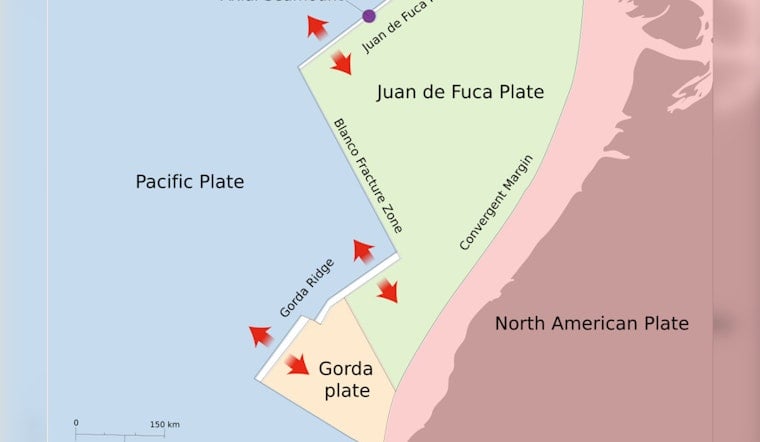
An early morning jolt rattled the Pacific well off Oregon’s southern coast on Monday, but this offshore shaker ended up being more of a wake-up call for geologists than for coastal residents. A magnitude 5.5 earthquake hit in the Blanco Fracture Zone in the Pacific Ocean, and because it was shallow and well offshore, emergency agencies did not issue a tsunami warning for West Coast shores. There were no immediate reports of shaking or damage along the southern Oregon shoreline, and officials said they were continuing to keep an eye out for aftershocks.
USGS Pinpoints Offshore Epicenter, No Tsunami Threat
The U.S. Geological Survey recorded the quake at about 4:35 a.m. and placed the epicenter roughly 175 miles southwest of Eugene, at an estimated depth of around six miles, according to KATU, which cites USGS data. The National Weather Service echoed that there was no tsunami threat to the coasts of Oregon, California and Washington, the station reported, and local emergency offices said there were no immediate reports of damage or injuries.
Why The Blanco Fracture Zone Rarely Sends Big Waves
The Blanco Fracture Zone is a right-lateral transform fault, where tectonic plates slide past one another rather than one diving under the other. That side-to-side, strike-slip motion typically does not lift or drop the seafloor enough to kick off a tsunami, the Pacific Northwest Seismic Network explains in its commentary. The BFZ routinely produces swarms and occasional M5-class earthquakes, and its long track record of offshore activity is mapped out on the Blanco Fracture Zone page on Wikipedia. That geology is a big reason forecasters pegged the main hazard from this event as shaking in the ocean rather than coastal flooding.
What Residents Should Do When The Ground Moves
If you feel strong shaking, the U.S. Geological Survey’s guidance is simple: “Drop, Cover, and Hold On.” Move inland or to higher ground only if you notice unusual ocean behavior or receive an official tsunami order, per USGS. The National Weather Service and tsunami centers will issue alerts if conditions change, but for now officials report no coastal threat, according to KATU. Residents who felt even mild shaking are encouraged to submit a felt report, which helps scientists refine the event’s location and strength.
How Common Are These Quakes?
Regional seismologists say this quake fits the well-known pattern of routine offshore activity along the Blanco zone. Clusters and swarms that include occasional M5-class events have been recorded there repeatedly in recent years, according to the Pacific Northwest Seismic Network’s analysis. Agencies will continue to monitor for aftershocks and will update public resources if any hazards change.




