

























































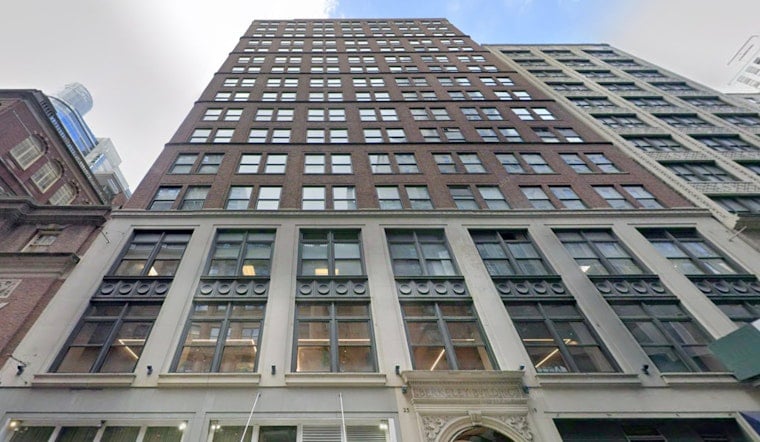
Olmstead Properties just scored a major Midtown office tower on the cheap, closing on the Berkeley Building at 19 West 44th Street for $108 million, a price that reflects roughly a 45 percent cut from its prior sale. The prewar, 18-story building spans about 303,000 rentable square feet and sits between Fifth and Sixth avenues near Bryant Park, a blue-chip address at a decidedly bargain-bin number. The deal spotlights how investors are combing Manhattan for value even as the office rebound mostly favors best-in-class towers.
Deal details
As reported by The Real Deal, Olmstead paid $108 million for 19 West 44th Street, acquiring the property from Savanna about nine years after that firm bought it for roughly $195 million. The Real Deal also noted that the closing price came in about 45 percent below the 2017 trade and that Eastdil Secured brokers Will Silverman and Gary Phillips arranged the sale.
About the Berkeley Building
According to Savanna, the Berkeley Building is a loft-style, 18-story office property with approximately 303,000 rentable square feet and large, easily dividable floorplates. Savanna’s materials state that the owner put about $20 million into capital improvements to the lobby, façade and elevators as part of a recent rebranding and leasing campaign.
Buyer, platform and playbook
Olmstead acquired the building in partnership with Vertex Properties, the investment platform launched by Adam Arnow and Patrick Pavone, according to reporting by Commercial Observer. Vertex has already closed several smaller Manhattan office deals since its debut, signaling a value-add approach where Olmstead can lean on its management and leasing capabilities to try to turn discounted assets into future winners.
Where this sale fits in the market
Industry data help explain how a markdown like this could clear. Per Colliers, leasing activity in early 2026 has picked up and availability has tightened in parts of Manhattan, but the recovery remains uneven. That bifurcation, with strong demand at the very top of the market and persistent pressure on older Class B stock, is a key reason well-located but non-trophy offices can trade far below their last-cycle peaks.
What comes next
Olmstead and Vertex appear set up for a classic value-add play: refresh the common areas, invest in targeted upgrades and build out plug-and-play suites that appeal to tech, media and creative tenants, all in service of boosting occupancy and effective rents. If that strategy clicks, this cut-rate acquisition could look savvy in hindsight; if it stalls, it will be one more example of the risk that still comes with betting on aging office buildings.
The sale of 19 West 44th Street is another sign that Manhattan’s office market no longer moves in lockstep. The environment now favors owners who can spend smartly on upgrades and push leasing hard. Expect a stream of leasing news and repositioning efforts from the new ownership as the market keeps sorting out which buildings become comeback stories and which ones lag behind.



