

























































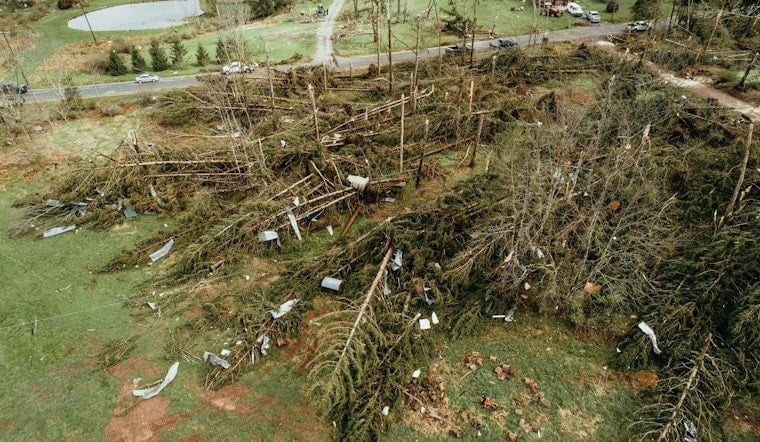
A year after a violent overnight derecho tore through the Bemidji area, the scars are still the first thing you notice. Streets and parklands are lined with stumps and towering brush piles, blue tarps still flap on roofs, and the familiar leafy skyline is a stripped-down version of its former self. Residents and officials say the cleanup has bled into a second growing season, and they are blunt about the long game: replanting will take generations.
How big was the blowdown?
The storm toppled an estimated 9 million trees around Bemidji and caused widespread structural and infrastructure damage, according to the Star Tribune. Reporters there detailed how hurricane-force straight-line winds turned neighborhoods and county roads into obstacle courses of trunks, limbs and shingles, creating a recovery problem that has rolled from one season to the next for homeowners and local government alike.
Winds and official measurements
National storm records and National Weather Service damage surveys show the system produced sustained, destructive winds, with local stations clocking gusts over 100 mph near Bemidji. That data led forecasters to classify the storm as a derecho, according to NOAA. Those official measurements shaped the emergency response in the days after the storm and guided later damage assessments by state and federal teams.
State mapping and forest health
From the air, the blowdown looks like someone raked a giant hand across the woods. State aerial surveys and the Minnesota Department of Natural Resources’ 2025 Forest Health Annual Report mapped thousands of acres of wind damage, with roughly 11,600 forested acres listed as heavily damaged and about 23,800 acres showing wind impacts in 2025, as outlined by the Minnesota Department of Natural Resources. Foresters warn that lightly and moderately damaged stands are easy to undercount and say the loss of mature trees complicates reforestation plans and timber revenues for years to come.
Federal help - but slow uptake
Federal and state cost-share programs came online to help with cleanup and replanting, but signups from private landowners have been sluggish. As reported by KAXE, officials mailed letters to roughly 9,000 woodland owners and had received only about 123 applications by late May. That gap could leave miles of downed trees and brush drying out on private parcels. Eligibility and reimbursements are handled through county Farm Service Agency inspections and program rules, which can feel like a lot of paperwork on top of an already overwhelming mess.
Salvage operations and market realities
Where toppled timber can still be salvaged, state sale notices and auction listings reflect steep price adjustments and tight operating windows designed to protect soils and limit bark-beetle problems. The Minnesota Department of Natural Resources timber sale documents spell out seasonal restrictions, hauling deadlines and other conditions that make moving blowdown wood technically possible, but often logistically and economically tough for private landowners trying to clean up their own stands.
Wildlife and habitat recovery
DNR wildlife staff say the storm reshaped habitat in complicated ways. Some species benefit from fresh openings and downed cover, while others are suddenly short on nest sites and shelter. Ecological recovery will be measured in years, not months, DNR northwest wildlife manager Blane Klemek told FOX 9. Managers are watching for invasive pests, reworking nest-site and cover restoration plans, and zeroing in on locations where habitat projects will pay off fastest for wildlife and hunting seasons.
Fire risk and what residents should do
Local fire officials say all that brush and scattered blowdown has set the table for higher-than-normal wildfire risk. Their advice is not subtle: chip, haul or otherwise reduce fuel loads instead of burning when restrictions are in place. According to KAXE, Bemidji Fire Chief Justin Sherwood and state foresters are pushing for early action and urging residents to work with the Farm Service Agency or a DNR stewardship forester to make cleanup and replanting safer and more effective.
One year on
One turbulent night a year ago reshaped homes, livelihoods and entire viewsheds across the Bemidji area. Officials say full recovery will depend on federal funding, a steady workforce and many years of planting new trees into the gaps the derecho left behind. For landowners and neighbors, the marching orders are straightforward even if the work is not: document damage, cut down the fuel hazards and stay in step with foresters and the agencies running recovery programs.



