

























































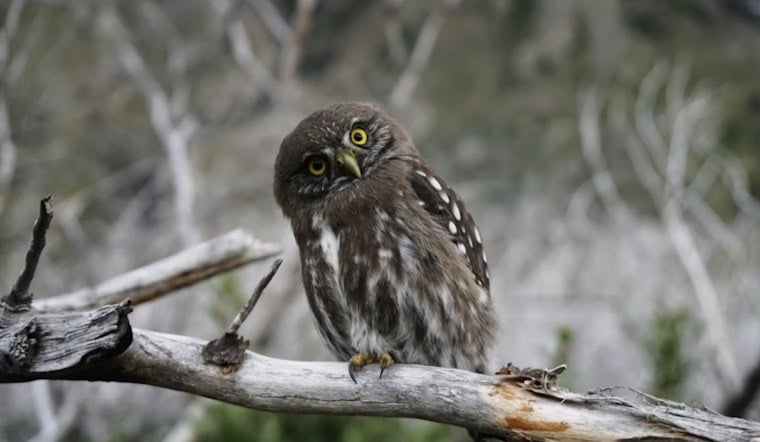
State foresters in Oregon are trading late-night call-and-response surveys for small, battery-powered microphones and artificial intelligence as they try to get a clearer picture of where threatened birds are living. The shift is meant to cut down on the safety risks of stumbling around steep timber in the dark while stretching limited monitoring dollars. Agency staff say the new setup can capture weeks of sound and then flag likely owl or murrelet calls for trained biologists to double-check.
What Oregon Is Testing
As reported by OPB, the Oregon Department of Forestry started experimenting with autonomous recording units in 2022 and now has 23 of the devices spread across state forests. ODF biologist Corey Grinnell told OPB the units, with rechargeable batteries, memory cards, and software, cost roughly $600 to $700 each. The agency says it is steadily moving away from single-night callback surveys where crews broadcast owl calls and then wait for responses.
Those traditional surveys often meant hiking into steep, rain-slick terrain and standing on dark forest roads while calling for owls, a routine that biologists say has long been both a safety headache and a staffing challenge.
How The Tech Works
As detailed by the Oregon Department of Forestry, autonomous recording units, or ARUs, function a bit like trail cameras, only with microphones instead of lenses. Once strapped to a tree, they can record bird and amphibian vocalizations for weeks at a time.
Managers later pull the memory cards and run the audio through software that converts sound into spectrograms, visual patterns that machine-learning models can scan for specific calls. When the system flags a likely spotted owl or marbled murrelet, human reviewers step in to confirm. ODF officials say this workflow lets staff analyze far more hours of potential habitat than they ever could by sending crews into the field night after night.
What The Science Says
Peer-reviewed research and federal monitoring pilots suggest that passive acoustic monitoring can deliver exactly those larger datasets. A recent study in the Wildlife Society Bulletin documents large ARU networks and shows that machine-learning models can pick out spotted owls and murrelets across millions of hours of recordings.
A separate report from the USDA Forest Service details PNW-Cnet deployments and comes to similar conclusions about the reach of acoustic surveys. Both efforts caution that automated detectors can generate false positives and uneven recall, which is why flagged detections are routinely checked by trained technicians before they are used in occupancy estimates.
Regulatory And Management Hurdles
NOAA Fisheries has overseen the Western Oregon State Forests Habitat Conservation Plan, a proposed agreement that would provide 70 years of incidental-take coverage for 17 species if it is finalized. Within that process, Oregon Department of Forestry officials say they are still waiting for the U.S. Fish and Wildlife Service to formally sign off on using acoustic recorders for Endangered Species Act monitoring, as reported by OPB.
Those federal calls will determine whether ARU data can fully replace or only supplement traditional survey methods when it comes to satisfying regulatory requirements.
Budget And Local Pushback
The money math is hard to ignore. According to the Oregon Department of Forestry, the agency spends about $2 million a year on spotted-owl surveys and around $500,000 on murrelet monitoring. Swapping some of that work to cheaper ARUs could free up funds for other recovery efforts.
The broader Habitat Conservation Plan, though, has already kicked up controversy over reduced timber revenue and local economic fallout. One flashpoint is a lawsuit by the tiny Jewell School District, which argues that changes tied to the plan will cut deeply into school funding, a battle covered by the Oregon Capital Chronicle. How the state squares community revenue needs with expanded wildlife monitoring and potential harvest changes will ultimately determine what this new data means on the ground.
For now, foresters say ARUs plus machine learning are a pragmatic way to widen their monitoring net while keeping biologists firmly in charge of final decisions about what is actually calling in the woods. Large federal pilot projects back that up, showing that human review remains a built-in part of the workflow. As federal reviews and Habitat Conservation Plan decisions move ahead, observers expect ODF to expand its deployments and keep pairing automated detections with human verification, a hybrid model that researchers say offers the best balance of scale and accuracy, according to a USDA Forest Service PNW report.





