

























































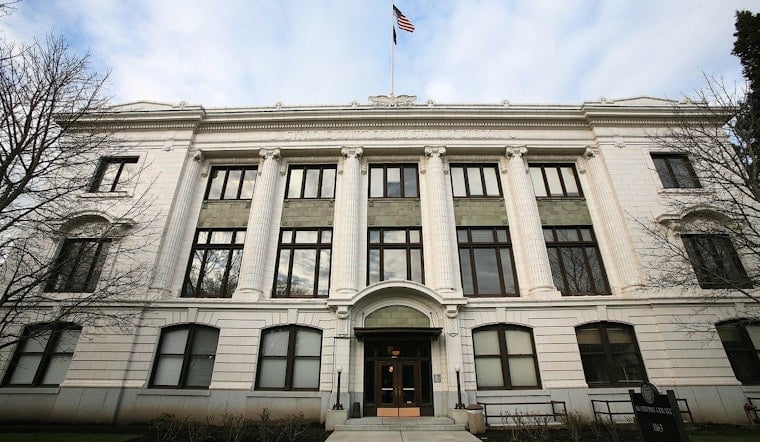
The Oregon Supreme Court on Friday took the rare step of striking a petition and dismissing a related proceeding after discovering that key filings leaned on case citations and quotations that simply do not exist. The court said the documents were generated in part with an AI research tool and that, when ordered to explain, the relators doubled down with new filings that again relied on bogus citations. The actions mark the state high court’s first public response to AI-created fabrications in court papers.
In two separate orders, the justices did not mince words. In one matter, they struck a petition for a writ of mandamus after finding that supporting memoranda relied on fabricated authorities. In another, they struck a respondent’s response, accepted a $500 sanction, and allowed only a tightly limited refiling. The court wrote that the relators’ submissions relied on a product called LegalAI and that, after a show-cause order, they filed “a declaration that included citations to at least four cases that do not exist in the Oregon Appellate Reports or the Oregon Reports.” The first order and a separate order spell out the timeline and the specific remedies the court put in place.
“We recognize that AI products may seem like an appealing short-cut to legal research and presenting legal arguments,” Chief Justice Meagan A. Flynn said in a statement on the rulings. “But when the court has to spend considerable time and effort addressing fabricated legal arguments, it comes at the expense of other cases,” she added. As reported by OPB, researchers estimate that more than 1,000 cases nationwide already contain inaccuracies tied to AI tools.
Judges and court administrators around Oregon have been sounding the alarm that filings with fabricated authorities are “rapidly escalating” and are chewing up court time, prompting new guidance and show-cause procedures. Jefferson Public Radio outlined the Court of Appeals’ warning and the measures being taken to track the drain on resources. Federal courts are moving in the same direction, with steep penalties for similar missteps, including roughly $110,000 in combined sanctions in an Oregon federal case, which highlights how expensive unverified AI output can be, according to legal analysis by Helsell Fetterman.
What This Means for Lawyers and Litigants
The bench could hardly be clearer: if you use AI, you still have to verify every line before you file. The Oregon State Bar has issued guidance and a draft opinion that stress competence, supervision, and the duty to confirm each cited case and quoted passage, and courts are signaling that they may strike filings, impose monetary sanctions, or refer matters for discipline when that does not happen. For more on the bar’s approach, see the Oregon State Bar.
For Oregon litigants and lawyers, the rulings carve out a narrow chance to correct honest mistakes but deliver a blunt warning at the same time: casual reliance on chatbots courts dismissal, fines, and potential professional fallout. Going forward, parties should expect judges to demand explicit certification and old-fashioned verification for any brief that leans on generative AI.





