

























































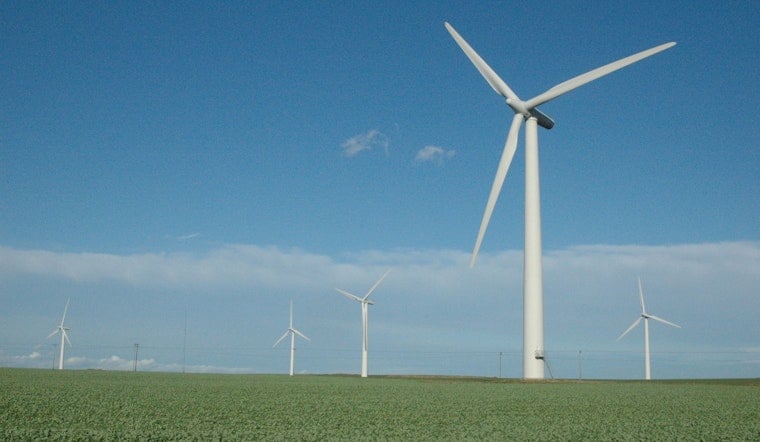
Out in Oklahoma’s Panhandle, turbines are cranking out more electricity than ever, but a lot of that cheap wind power is hitting a wall instead of lighting up homes in Tulsa and Oklahoma City. High-voltage lines have not kept pace, approvals are crawling, and on the windiest days developers and grid operators are watching megawatts get dialed down instead of delivered. Multi-billion dollar fixes are on the drawing board, but the brawls over who pays, which routes survive, and how new state rules complicate transmission are already well underway.
Wind Is Big In Oklahoma, and Growing
Oklahoma has quietly climbed into the top tier of wind power states, with much of that boom centered in the thinly populated Panhandle. According to the U.S. Energy Information Administration, the state ranked third nationwide in wind electricity generation in 2024, and wind now supplies roughly 42% of Oklahoma’s in-state generation.
Curtailment And Congestion Are Eating Output
That success story comes with a catch. A growing share of Oklahoma wind power is being curtailed because the lines needed to carry it to big load centers are clogged. S&P Global Market Intelligence reports that curtailment in regions like the Southwest Power Pool has jumped sharply, and SPP’s own market monitor shows average hourly wind curtailment climbing from the low hundreds of megawatts to more than 1,000 MW in recent years.
Texas Built The Lines, And Slashed Curtailment
Across the border, Texas offers the case study Oklahoma planners keep pointing to. When state leaders ordered the CREZ transmission buildout to move Panhandle wind toward major cities, curtailment plunged to near zero once the network went live. Reporting on that program finds that roughly $6.8–7 billion in investment opened up western wind to large demand centers and dramatically cut wasted generation. Utility Dive reviewed the CREZ outcome and its costs.
New State Law Tied Developers' Hands
In 2025, Oklahoma lawmakers added a fresh twist with House Bill 2752. The measure bars the use of eminent domain for many renewable siting decisions and requires a Certificate of Authority before developers can seek eminent domain for transmission projects above 300 kV. The enacted bill and its floor language spell out those limits, and developers say the changes have slowed work on long-distance lines. The bill text is available from the Oklahoma Legislature.
Developers Say Projects Are Slowing
That policy shift is landing on projects already wrestling with tough logistics. Invenergy, developer of the Cimarron Link, a proposed HVDC line designed to move Panhandle wind to a Riverside substation near Jenks, acknowledged a slowdown in early 2026 as routing questions and landowner talks dragged out. Local coverage and company materials indicate the line still carries federal backing, but the schedule and easement deals are unsettled. OK Energy Today reported the company’s confirmation, and project specifics are posted on the Cimarron Link site.
Regional Plans Map Out Options, But The Scale Is Huge
At the regional level, planners are sketching out what it would take to relieve the crunch. The SPP-MISO Coordinated System Plan draft released this year outlines two portfolios: a lower-cost “Core” around $1.3 billion and a larger “Core+” near $3.6 billion, both aimed at easing constraints along the southern seam that includes Oklahoma, Arkansas, Texas, and Louisiana. The Department of Energy’s national transmission planning study finds the country will need transmission expansion on the order of thousands of high-capacity miles per year, roughly 5,000 miles even in conservative scenarios. Yet analysts pulling together updated FERC counts note that only about 888 miles of new 345 kV and above lines were completed in 2024, a sharp reminder of the gulf between plans and steel in the ground. Details are laid out in the draft MISO-SPP CSP, the DOE National Transmission Planning Study, and the FERC infrastructure compilation from Grid Strategies / ACEG.
The stakes for Oklahoma are close to home. Without agreed routes, signed-off cost sharing, and a smoother path for siting, the state risks leaving low-cost Panhandle wind stuck behind bottlenecks while households and businesses keep paying for tighter local supplies. The next round of stakeholder comments on the MISO-SPP recommendations, along with any follow-up from the Corporation Commission, will help decide whether those Panhandle turbines finally power cities across the state instead of spinning into a traffic jam in the sky.





