

























































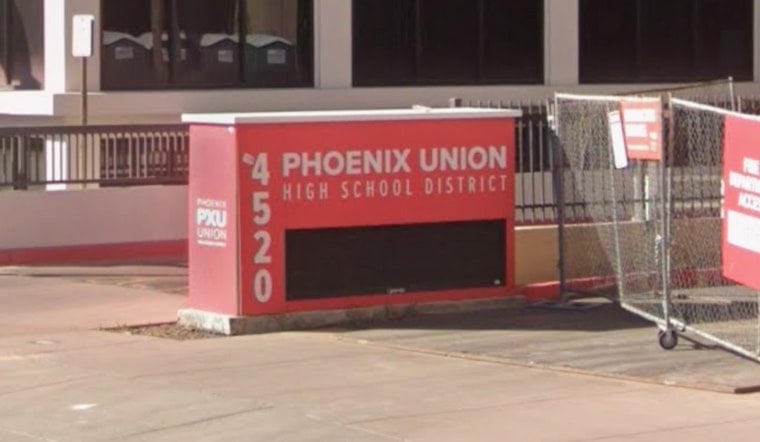
The Phoenix Union High School District is bringing back police in a big way. The governing board voted Thursday to accept state funding that will put 15 full-time school resource officers on campuses next school year, more than tripling the number of dedicated officers currently in place and signaling a sharp shift from its earlier stance on police in schools.
Board Vote And What Changes
At its June 4 meeting, the board approved grants from the state’s School Safety Program that will pay for 15 full-time SRO positions across district campuses. According to KJZZ, Phoenix Union currently has four SROs and two school safety officers on campus, so the new money will more than triple the number of full-time officers starting next school year.
The expansion caps a steady reversal in policy. The district chose not to renew its annual agreement with the City of Phoenix in 2020, effectively phasing officers out of schools, and only began cautiously bringing a small number back in 2023.
How State Money Steers Spending
The new hires are being bankrolled through the Arizona Department of Education’s School Safety Program and the federally funded Stronger Connections grant, which gave competitive priority to SRO and SSO positions. As outlined by the Arizona Department of Education, Stronger Connections dollars are limited to certified SROs or equivalent SSOs, come with required training resources, and are set to support positions through the 2025–26 school year under the current grant timeline.
In other words, the money is generous but not permanent, and it is tightly aimed at law enforcement-style roles rather than broader student support services.
Public Comment Divided
The meeting drew a packed crowd, and the public comment period made clear that the community is anything but unified on the move. Many students and community members lined up to urge the board to say no.
Student Genesis Camacho told board members, "Right now, many immigrant students and families are already living in fear and uncertainty. Adding more law enforcement to schools can increase that fear instead of making students feel safe," according to KJZZ.
Some staff and principals, however, argued that officers on campus are a critical safety tool rather than a threat. North High principal Jamie Johnston said an SRO provides a direct line to dispatch and allows school staff to focus on managing an emergency scene instead of juggling both communication and response.
Research And Statewide Debate
The broader research picture is just as complicated as the testimony. National studies have found that SROs can reduce certain types of school violence but do not reliably prevent school shootings. They can also be linked to higher rates of suspensions, expulsions, and police referrals, outcomes that have triggered serious equity concerns in districts across the country.
Cronkite News reviewed that body of research alongside local meetings and highlighted both the mixed safety findings and the disproportionate impacts seen in some school systems.
At the same time, Arizona officials have been leaning into SRO funding, not backing away from it. Recent expansions of school safety dollars have added hundreds of positions for resource officers, counselors, and social workers statewide, a trend described in reporting from ABC15.
Training And What Comes Next
The district says its new officers will receive Phoenix Union specific safety training, including guidance for working with students who have special needs. The Arizona Department of Education’s School Safety Program also requires an officer training series and site emergency plans as part of the deal.
The grants are time limited under current federal and state awards, so the district will have to move quickly to hire, certify, and train officers while the money lasts.
Supporters argue the additional SROs will speed up emergency response and bring more stability to campuses. Opponents contend the funding should go to counselors and restorative justice programs instead of more badges in the hallways. With the board’s vote now locked in, the focus shifts to implementation, as community groups and school leaders watch closely to see how the new roles affect discipline, campus climate, and student trust.





