

























































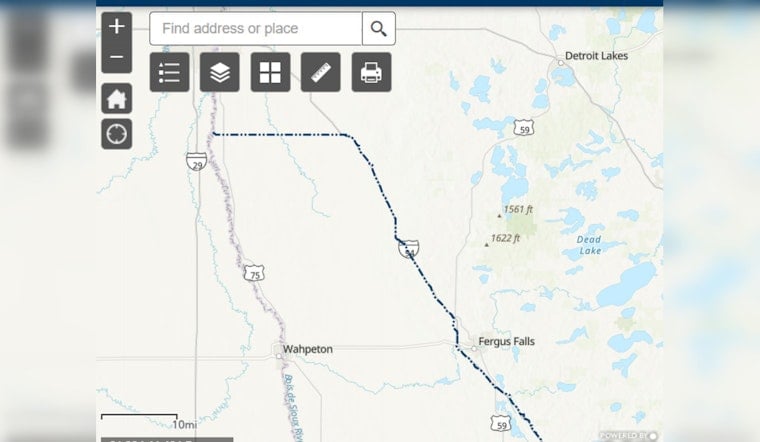
State regulators and utility representatives packed into Fergus Falls on Wednesday for an open house and public hearing on a proposed 345-kilovolt transmission line that would add a second circuit between the Minnesota-North Dakota border and Alexandria. Farmers, local officials, and company staff filled the Bigwood Events Center and pressed the project team on where new poles would go, how far apart they would stand and how landowners would be paid if more hardware shows up on their property.
What the project would add
The proposal calls for roughly 100 miles of a second 345-kV circuit on mostly double-circuit capable structures, along with an estimated 107 new monopole structures, 86 of them in Minnesota, according to the Minnesota Public Utilities Commission. Project materials state that the new circuit would largely stay within the existing 150-foot right-of-way. The plan also includes upgrades at the existing Bison Substation in North Dakota and the Alexandria Substation in Minnesota.
Why utilities say it is needed
A coalition led by Xcel Energy, joined by Great River Energy, Minnesota Power, Otter Tail Power Company and Missouri River Energy Services, says the second circuit is designed to ease congestion on the line, improve delivery of new generation and make the regional grid more resilient in severe weather. In its project announcement, Xcel Energy also emphasized that most of the new equipment is planned inside the existing corridor to limit impacts on additional landowners.
Questions from landowners
During the Fergus Falls session, landowners zeroed in on how many additional poles might be added, how spacing would be set and what kind of reimbursement they could expect. According to the Fergus Falls Daily Journal, applicants said they would look at existing easements when deciding where to place new structures and that new monopoles would typically be installed about 40 feet from existing poles.
Timeline and next steps
The PUC accepted the application for review earlier this year, and utilities and state staff held scoping meetings on June 3 and 4. The EQB Monitor notice sets the formal scoping comment period through June 26 and notes that the applicants expect construction to begin in July 2028, with the line entering service in June 2032 if all required permits are granted.
Docket filings include a Certificate of Need application and a route-permit amendment, which will be used to prepare the environmental report and to shape the schedule for future PUC hearings and final orders.
How to weigh in
Maps, application documents and meeting materials are available on the project website and in the project library. The Fargo-to-Alexandria project site lists upcoming hearings and outlines how to submit written comments into the commission docket. Written scoping comments are being accepted through June 26, and both the project site and the docket provide contact information for submitting written or oral comments for the record. The project library also links to filed appendices and full application materials.
Legal note
“Comments received at the hearings and during the comment period will be used to inform the record,” the project site states. It also notes that questions about compensation usually hinge on the terms of existing easements and any additional rights the utilities seek in the permitting process. Landowners who want to be sure their concerns are part of the official record are advised to submit written comments to the docket or contact the commission’s project coordinator listed on the project page.



