

























































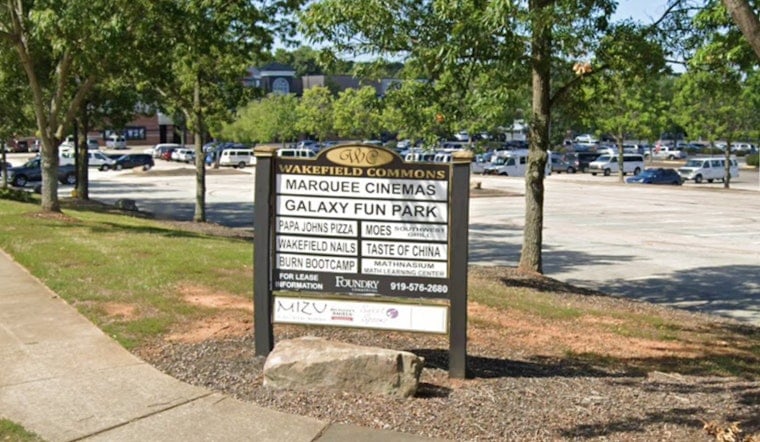
Wakefield Commons, a heavily trafficked neighborhood shopping center in North Raleigh, has quietly changed hands. Wilder and Greenberg Gibbons have bought the 163,975-square-foot complex at the intersection of Capital Boulevard and Falls of Neuse Road and say they are ready to pour money into upgrades now that the deal is done. The center was mostly leased at closing, and the new owners are pitching their plans as targeted renovations meant to keep everyday services and national retail tenants right where they are.
The acquisition comes through a joint venture between Wilder and Boston-based Greenberg Gibbons, which teamed up to purchase the 163,975-square-foot property while it was 96.3 percent leased. Current tenants include Starbucks, Marquee Cinemas and Burn Boot Camp. The deal marks Wilder’s entry into North Carolina and the first purchase from Greenberg Gibbons’ newly launched fund, according to Shopping Center Business.
The seller was Mishorim Gold NC LP, and the property reportedly traded for about $33 million, per a report in Maryland Daily Record. Greenberg Gibbons says Wakefield Commons will serve as the inaugural investment for its Real Estate Income Fund II, launched earlier this month. "The launch of our second fund and acquisition of Wakefield Commons represents an important milestone for our firm," Greenberg Gibbons President Eric Walter said in a release, as reported by Maryland Daily Record.
Fund Strategy And First Purchase
Real Estate Income Fund II is targeting roughly $300 million to acquire necessity-driven shopping centers up and down the East Coast. The strategy centers on grocery-anchored and neighborhood retail that throws off steady income while still offering room to tweak the tenant mix, according to ConnectCRE. Wakefield Commons slides neatly into that playbook as a nearly full neighborhood center in a high-traffic corridor.
Renovations, Not Redevelopment
Instead of tearing anything down, the joint-venture partners are talking about renovations and operational improvements, not a ground-up redevelopment. That approach should allow existing retailers to keep their doors open while work is underway. Because the center was already close to fully leased at purchase, the owners say they can zero in on tenant-facing upgrades, improved signage and parking tweaks to keep Wakefield Commons competitive with other retail hubs nearby, per Shopping Center Business. It is the kind of refresh that typically lands faster and with far less disruption than a full-blown rebuild.
For shoppers in Wakefield and surrounding neighborhoods, the deal is meant to feel like business as usual, just with the potential for fresher storefronts and a few new conveniences. On the investment side, the sale highlights ongoing appetite for necessity-anchored retail, a trend noted by ConnectCRE that could steer more institutional capital toward similar neighborhood centers in the Triangle.





