

























































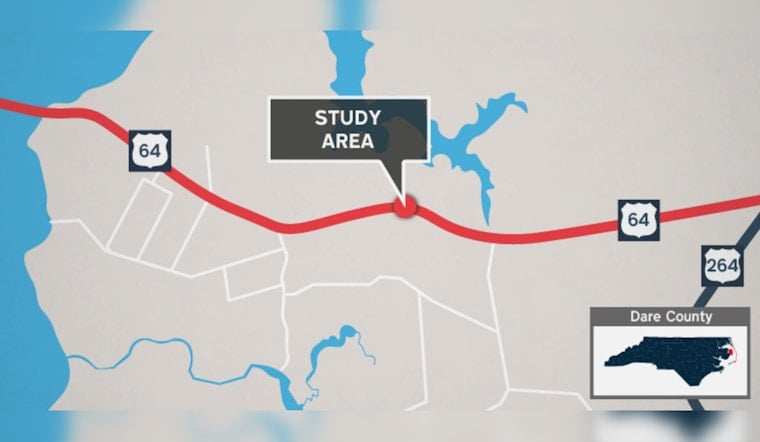
The N.C. Department of Transportation is moving ahead with plans to install a series of wildlife underpasses and guiding fences beneath a 2.5-mile stretch of U.S. 64 through the Alligator River National Wildlife Refuge, aiming to protect the world’s last wild red wolves and thousands of other animals. The package carries an estimated price tag of about $31.25 million.
Public meeting and how to comment
NCDOT will roll out design options and take public feedback on Tuesday, June 23, from 5:30 to 7:30 p.m. at the Manns Harbor Community Building, and officials are accepting comments through July 10, according to Coastal Review. Attendees can speak up in person, call in, or use the project’s online portal to weigh in.
Funding and partners
The work is estimated at $31.25 million, including a $25 million Wildlife Crossings Pilot Program grant and roughly $6.25 million in matching funds; nearly $4 million of that match was raised by the Center for Biological Diversity and the Wildlands Network, per NCDOT. The state’s transportation program lists the project as covering the underpasses, associated fencing, and post-construction monitoring.
Roadkill survey lays out the problem
To spell out just how dangerous these roads already are, the Wildlands Network has been running a daily roadkill survey since August 2024. In the first year alone, observers recorded 5,044 vertebrate deaths along U.S. 64 and U.S. 264, including 1,529 frogs, 1,186 turtles, and 1,050 snakes, according to the organization’s year-one report (Wildlands Network). Those grim tallies will serve as a pre-construction baseline to see whether the crossings actually cut down on road mortality.
Where the crossings will go
The planned passages target a 2.5-mile segment of U.S. 64 from the eastern edge of the East Lake community to just west of Robertson Landing Road, a stretch researchers and managers have flagged as a major crossing hotspot, as reported by The News & Observer. Agency officials say the exact number of underpasses is still to be determined, and that openings will likely vary in size, with larger ones intended for black bears, deer, and red wolves.
Why red wolves are central
The U.S. Fish and Wildlife Service estimates that fewer than two dozen red wolves remain in the wild in eastern North Carolina, so each animal lost to a vehicle is a major blow to the species’ recovery, according to U.S. Fish & Wildlife Service. Studies cited in conservation reports show that at least 19 red wolves have been struck and killed on U.S. 64 over the years, and the Wildlands Network has said it will continue its daily surveys to maintain a baseline for evaluating how effective the crossings are (Wildlands Network).
Also a public-safety fix
Supporters and state officials stress that the project is about driver safety as much as wildlife. Law enforcement responded to 40 crashes in that 2.5-mile section from 2021 through March 2026, 19 of them involving black bears, as reported by The News & Observer. Fencing that funnels animals toward the underpasses is expected to reduce collisions with large wildlife that can injure people and wreck vehicles.
Next steps and monitoring
NCDOT expects to complete design work in 2027 and start construction in 2028, with post-construction monitoring built into the plan, per NCDOT. During design, officials say they will also factor in construction access, traffic flow on this hurricane evacuation route, and steps to limit impacts on canals, wetlands, and nearby private property.
To learn more or submit comments, residents can attend the Manns Harbor meeting next Tuesday or use the project’s online portal. Full meeting details and submission instructions are available in the Coastal Review write-up and on the NCDOT project page. Officials say community feedback will be considered as design moves forward and wildlife advocates continue monitoring the corridor.





