

























































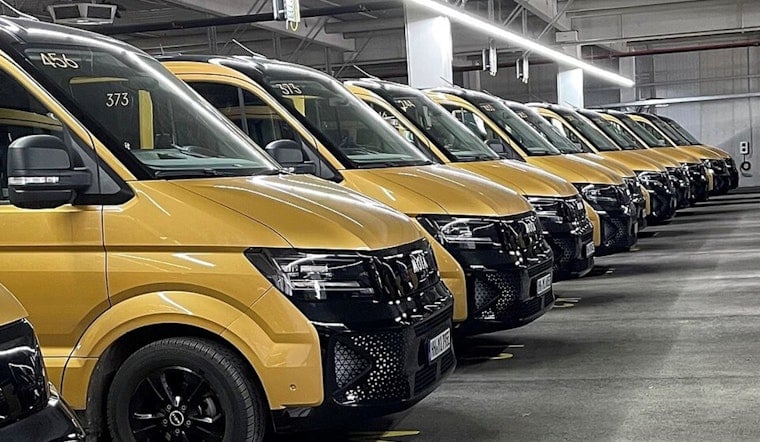
Volkswagen's MOIA America and Uber have started on-road validation testing of purpose-built ID. Buzz robotaxis on Los Angeles streets, the companies say. Prototype electric minibuses with human safety operators are running supervised routes as the partners prepare to offer passenger rides through the Uber app. Angelenos may spot the retro-styled vans with roof-mounted sensor stacks creeping along in tightly controlled runs as the program ramps up toward a commercial launch targeted for late 2026.
In a press release, MOIA America said the validation phase is expected to grow to "more than 100" autonomous ID. Buzz vehicles, each staffed with an onboard human operator while engineers refine software, mapping and operations. The announcement also notes that MOIA and Uber have opened a joint facility in Los Angeles to handle daily fleet operations and that rides sold through the Uber platform are planned to begin in late 2026.
The production variant, the ID. Buzz AD, carries a 27-sensor array made up of 13 cameras, nine LiDAR units and five radars that together provide a redundant 360-degree view for the automated driving system. Reporting and supplier materials indicate that this sensor data is processed by a computing stack supplied by Mobileye, while MOIA's AD-MaaS platform manages fleet orchestration and remote supervision. Mobileye describes the technical backbone.
How the L.A. trials will run
The rollout is starting small. TechCrunch reported an initial batch of roughly 10 vehicles, with the fleet expected to grow as systems are validated. During this phase each ID. Buzz will have an operator in the driver’s seat who can take over when needed, and MOIA says remote supervision tools will allow a control center to monitor vehicles in real time. The partners emphasize that the timeline for any driverless service depends on test performance and on clearing all required regulatory approvals.
What riders in L.A. can expect
Once the service goes live, the ID. Buzz AD is slated to be bookable through the Uber app and is configured for short trips with seating for four passengers and a luggage bay where the front passenger seat would normally be. Volkswagen Group and MOIA say the cabin layout and boarding flow were designed for quick urban hops and easy access. In the near term, riders should expect supervised trials rather than fully driverless trips, and the conspicuous sensor hardware will remain a visible part of the van's exterior.
Bigger picture
The Los Angeles pilot is one piece of a larger play. MOIA and Uber say they plan to scale to thousands of ID. Buzz AD vehicles across multiple U.S. cities over the next decade, folding robotaxis into Uber's mix of human drivers and autonomous vehicles. Uber has framed the deal as a step toward broad autonomous ride hailing, even as the strategy puts MOIA into direct competition with Waymo, Cruise and other AV operators and revives familiar debates over safety, labor impacts and data governance that cities and advocates are unlikely to let slide.
Regulatory hurdles
California keeps a tight grip on robotaxi experiments. The DMV controls testing and deployment permits, while the California Public Utilities Commission runs the passenger-service pilot and deployment programs that decide when and how companies can carry paying riders. Commission guidance requires matching DMV permits and notes that early pilot stages frequently bar companies from charging fares and demand communication links to remote operators. Legal analyses also highlight that operators must document extensive testing, data logging and incident reporting before they can apply for permission to run fully driverless services.
For now, Angelenos are likely to see only a small number of closely supervised ID. Buzz vans as MOIA and Uber collect miles, hunt for edge cases and seek regulatory sign offs. The companies are publicly targeting late 2026 for bookings on the Uber app, but how quickly those retro robotaxis become a routine sight in L.A. traffic will depend on what the tests uncover and whether regulators are convinced enough to greenlight driverless operations.





