

























































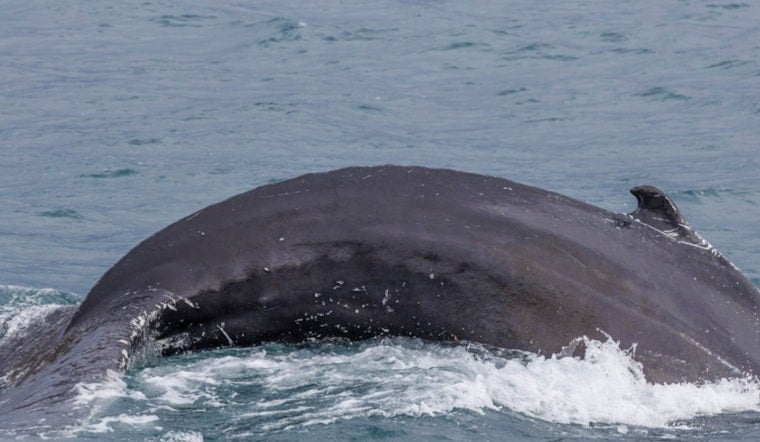
Off Rhode Island’s Coxes Ledge on Sunday, a massive white shark turned a dead humpback whale into an all-you-can-eat buffet. The estimated 14-foot shark was photographed ripping into the blubber and bone of the roughly 30-foot carcass while birds hovered overhead and nearby boats jockeyed for a better look.
According to the Boston Herald, crews on several boats captured the feeding from multiple angles. Jon Dodd of the Atlantic Shark Institute told the paper that white sharks are rarely seen in Rhode Island waters until a whale dies, then they seem to appear out of nowhere. His team said they were unable to tag the big shark working over this carcass, and researchers cautioned that no one yet knows how many sharks may have visited the whale before or after those photos were taken.
How scientists are documenting the event
The Atlantic Shark Institute outlines an acoustic receiver array and baited-remote underwater video surveys that it uses to keep tabs on sharks in southern New England. Scientists say the mix of telemetry data and BRUV footage is key to figuring out whether this was one giant shark doing most of the work or a rotating cast of visitors turning the carcass into a full-on feeding hotspot.
Feeding hotspots form around whale carcasses
NOAA Fisheries describes white sharks as opportunistic predators that will "occasionally scavenge dead whales," a habit that can quickly draw in other predators and scavengers. In the U.S. Atlantic, the species ranges from Maine into the mid-Atlantic, and researchers say seasonal shark movements combined with recovering marine mammal populations help explain an uptick in sightings along the northern shelf.
What beachgoers and boaters should know
The New England Aquarium has urged the public to be "shark smart" as sightings rise and recommends reporting encounters to community tools such as the Sharktivity app. Verified reports and photos help scientists track seasonal patterns, and the aquarium reminds people to steer clear of areas with seals or dense schools of fish and to follow lifeguard instructions.
Photographer Callum Crawford supplied the images used with the Boston Herald’s report, which also noted that the Atlantic Shark Institute has tagged 55 white sharks and expects to publish its first paper on white sharks in Rhode Island waters later this year. Scientists say they will be combing telemetry records and photographs in the coming days to see whether the whale drew in many sharks or whether one very large animal did most of the feasting.
The Atlantic Shark Institute says detections from its acoustic receivers and BRUVs will help reveal how many sharks visited the carcass and will place the event in seasonal context, with data shared with state partners as it comes in. Anyone who spots a shark, a carcass, or unusual feeding activity is asked to report it to state marine authorities or through the Sharktivity system so teams can document what is happening and respond if needed.


_Eyjafjordur_diving_3_of_27.jpg)