

























































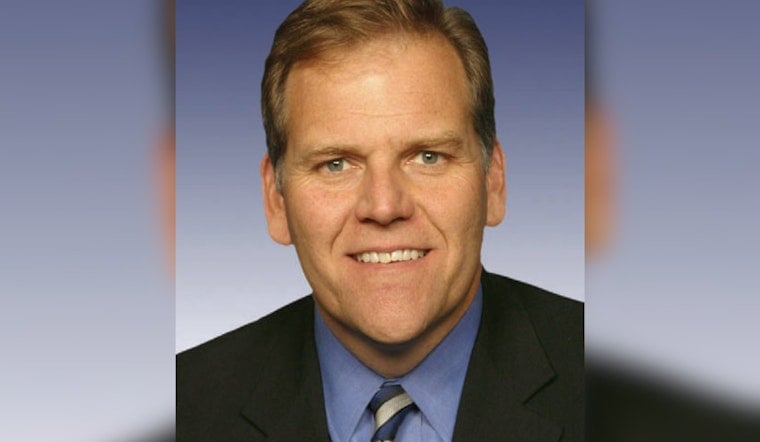
Mike Rogers' Senate campaign yesterday told Democratic hopeful Abdul El‑Sayed to knock it off with calling the former congressman a "pharma lobbyist" and accusing him of taking a $14 million payout, or face a defamation lawsuit. The warning came in a formal cease‑and‑desist letter that turned what had been a sharp campaign taunt into the opening move in a potential courtroom fight, with both sides now pitching the clash as a test of credibility and momentum ahead of Michigan's summer nominating contests.
Rogers' campaign fires off legal warning
In the letter, Rogers' attorneys wrote that "Mr. Rogers is not and never has been a registered lobbyist" and demanded that El‑Sayed stop describing him as a pharma lobbyist. They also threatened to sue for defamation if El‑Sayed's team did not retract the $14 million payout allegation, according to reporting by The Detroit News.
El‑Sayed doubles down
El‑Sayed has repeatedly accused Rogers of taking a $14 million payout as a pharmaceutical lobbyist and has used that allegation to build his broader argument about what he calls the influence of Big Pharma. He paired the charge with a sharp one‑liner, "I'm going to eat that man's lunch," during interviews that were later reproduced by Current Affairs.
Claims, disclosures and timing
El‑Sayed's campaign told reporters that the $14 million figure comes from what it sees as an unexplained jump in Rogers' publicly disclosed net worth between 2015 and last year, a calculation the campaign says points to gains that have not been fully accounted for. Rogers' lawyers have pushed back, calling the payout allegation false and noting that Rogers' most recent public financial disclosure lists no non‑investment income from any pharmaceutical company. They also pointed out that Rogers obtained an extension on his 2025 disclosure, so that filing is not due until later this summer. Those details appear in the campaign's letter and in coverage by The Detroit News.
Campaign cash and context
To bolster their critique, El‑Sayed's team has highlighted long‑running industry support, saying Rogers has accepted more than $670,000 from pharmaceutical and health‑products donors over the course of his political career. That total aligns with OpenSecrets data reported by The Michigan Independent, and Bridge Michigan has previously documented hundreds of thousands of dollars flowing to Rogers from the industry while he advocated expanded access to prescription pain medications during his time in Congress.
Legal implications
Cease‑and‑desist letters are a familiar early step when political disputes get heated, but actually filing and then winning a defamation suit is a far steeper climb for any public figure. Because both men are public figures, a court would require proof of "actual malice" that is, that the defendant knew a statement was false or acted with reckless disregard for whether it was true, under Supreme Court precedent summarized by the Legal Information Institute at Cornell Law School.
Bottom line
The back‑and‑forth is sharpening the focus on Rogers' record and handing El‑Sayed another way to frame the race as a fight over drug prices and pharmaceutical industry clout. If El‑Sayed emerges as the Democratic nominee, that framing and the unresolved question of whether the $14 million claim can be backed up are likely to sit at the center of the fall campaign in a Senate contest that local reporting has repeatedly flagged as one of Michigan's most competitive this cycle, according to Bridge Michigan.




