

























































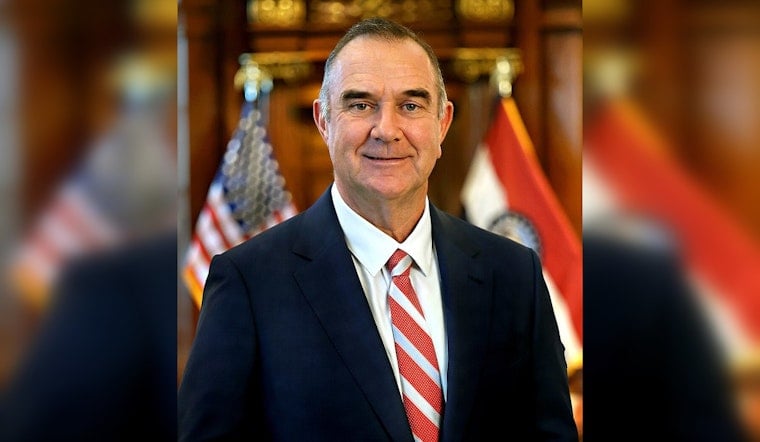
On June 18, Gov. Mike Kehoe walked into Missouri S&T's new Protoplex talking up large-scale AI data centers. Outside, a steady but smaller crowd of opponents gathered to warn that those same facilities could drain water, strain the grid and chip away at basic quality of life. Inside and out, the message was clear: Missouri's data center debate has officially jumped from backroom planning into street-level politics.
Kehoe convened the Governor's Forum on Artificial Intelligence and Data Centers at Missouri S&T's Protoplex, a daylong event organized around energy, workforce, environmental and community questions, according to Missouri S&T. The university reports the forum ran from 9 a.m. to 3:30 p.m. at the Protoplex, 1700 White Columns Drive, on the Rolla campus.
Supporters Pitched Jobs And Planning
Speaking to attendees, Kehoe argued that Missouri "does not have to choose between economic growth and common sense" and urged officials to "move past the noise" and "listen to facts," WGEM reported. He acknowledged that large developments tend to put upward pressure on power rates but said recent legislation and regulator rules can protect consumers. Panelists, for their part, leaned hard on the promise of workforce training and infrastructure upgrades as immediate public benefits for communities that court data center investment.
Opponents Turned Out And Officials Moved
Outside the Protoplex, roughly three dozen protesters from Rolla and nearby communities gathered to highlight concerns about water use, noise and children's health, St. Louis Public Radio reported. Clean Earth 4 Kids organizer Suzanne Hume told reporters the effort was aimed at protecting "our water, air, land and children's health and future," according to the outlet.
The same report notes that Rolla's city council voted on June 24 to ask staff to draft a possible moratorium on data center development for future consideration. City staff told officials that no developers had yet approached the city, even as residents pressed for guardrails before any projects appear.
Backlash Is Reshaping Local Politics
The political fallout is already visible elsewhere. In Festus, voters ousted several incumbents after the city council approved a $6 billion data center plan, and petitioners have filed recall efforts, according to KCUR. Across the region, multiple suburbs have responded by tightening zoning rules or passing measures that make data center siting more difficult, creating a patchwork of local policies that could easily influence where developers look next.
National Context
The fight in Missouri is not happening in a vacuum. A Gallup survey conducted in March found that about 71% of Americans oppose building AI data centers in their local area, underscoring the political headwinds these projects face at the community level, Gallup reported. That national skepticism helps explain why local hearings are packed, and why some projects eventually land in front of judges or recall campaigns instead of just planning commissions.
What’s Next
State and local leaders say they want growth with guardrails, not a free-for-all. Some lawmakers have introduced bills aimed at greater transparency and more local input for incentive-backed projects, ABC17 reported. For municipalities like Rolla, the immediate menu of options includes drafting new ordinances, imposing temporary moratoria, or waiting to see whether broader state guidance arrives while utilities and regulators sort through infrastructure impacts.
For now, the argument is unfolding in public view: universities and governors tout economic opportunity, developers talk up jobs, and neighbors insist on guarantees before any shovels hit dirt. Whether local rules, lawsuits or statewide policy ultimately dictate the next wave of data center proposals in Missouri is a question that, for the moment, does not have a clear answer.





.jpg)