

























































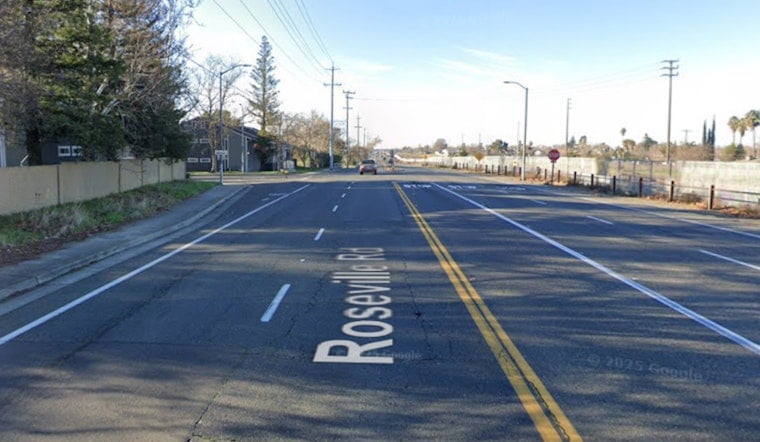
Eight men have died along a 1.8-mile stretch of Roseville Road in Sacramento, a bleak tally underscored by a crash on Friday that killed two more people. That short industrial corridor has quietly turned into one of the city’s deadliest drives, with neighbors and safety advocates blaming narrow shoulders, missing sidewalks and long, straight segments where drivers routinely pick up speed on a road signed at 50 mph.
According to reporting by The Sacramento Bee, the Sacramento County Coroner said a crash at Roseville Road and Tri Stations Road on Friday killed Salvador Rodriguez Tafoya, 47, and Javier Rebolledo Gomez, 27. Their deaths bring to eight the number of men killed in five crashes on that same 1.8-mile span since January 2024. The Bee’s report names other victims, including Mohammad Shaoib Durrani, Omar Durrani and Hashmatullah Durrani, along with a motorcyclist and a pedestrian, and traces how those deaths have piled up over the last two and a half years. The paper also cited a Department of Public Works analysis showing that roughly 73% of Sacramento’s fatal and serious-injury crashes occur on the city’s “high-injury network,” even though that network covers only a small share of local streets.
Why this stretch is deadly
The Roseville Road corridor is mostly two lanes with tight shoulders, long sightlines and almost no protected space for people walking, biking or waiting for the bus. It is a textbook recipe for high speeds and high-consequence mistakes.
Sacramento has adopted a Vision Zero pledge to eliminate traffic deaths and severe injuries by 2027, according to City of Sacramento materials, and the city is using the high-injury network to decide where safety projects should land first. Transportation planners say engineering fixes such as sidewalks, separated bike lanes, clearer medians and safer crossings tend to cut crash severity far more reliably than enforcement on its own.
What the city says it will do
City officials acknowledge the danger along Roseville Road but say a backlog of work has slowed bigger overhauls. In the meantime, staff are lining up lower-cost “quick-build” changes meant to get something on the ground faster.
A Department of Public Works spokesperson told The Sacramento Bee that the city is planning a quick-build upgrade to make the raised median at Roseville Road and Connie Drive more visible and is mapping out a second project to install and improve barriers along the corridor. Those stopgap efforts are supposed to tackle the most urgent risks while longer-range projects in the Transportation Priorities Plan sit in a crowded queue competing for funding.
Past crashes and community grief
Along the roadside, clusters of photos, candles and faded bouquets mark the spots where crashes turned deadly. Families and neighbors have returned again and again to add new names, treating what looks like a wide suburban road as something closer to a memorial wall.
The August 2025 crash that killed three young men led to criminal charges and drew wide attention, underscoring how one bad moment on this corridor can become multiple fatalities, according to reporting on how three die in fiery Sacramento DUI crash. Advocates say the pattern of tragedy shows the limits of piecemeal fixes and argue that the high-injury network needs fully funded construction, not one-off patches, if the city is serious about its Vision Zero goal.
What’s next
The city is taking public comment this summer on an update to its Vision Zero Action Plan, and officials say that process will help decide which near-term projects get pushed to the front of the line. City of Sacramento materials lay out the draft plan and a calendar of community meetings.
Safety advocates, though, say the real benchmark will be concrete changes along streets like Roseville Road, not just plans and slide decks. For now, neighbors and traffic-safety groups are watching to see whether the promised quick-build tweaks and new barriers actually show up before the corridor’s death toll climbs any higher.




