

























































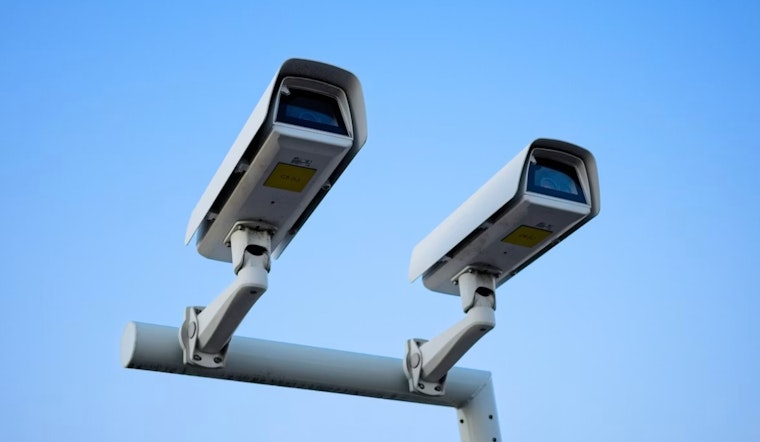
Santee is edging closer to a test run of license plate cameras after the City Council on Tuesday told staff to draft an agreement with the San Diego County Sheriff’s Office for automated license plate readers. The plan on the table is a one-year pilot with six fixed cameras. Councilmembers said the package would cost roughly $18,000 for the year, plus relatively small installation charges per camera, with the sheriff’s team running the system. The move comes as debates over ALPR surveillance and privacy flare across California.
Under the proposed deal, city funds would flow to the sheriff’s office, which would then contract with Flock Safety for cameras that capture license plates along with time, date, and location data. The draft terms call for a one-year agreement for six readers at about $18,000 total, plus an installation fee of roughly $150 per camera. The sheriff’s policy keeps ALPR data for 30 days. Private homeowners and homeowners associations could also make their own separate arrangements with Flock for private ALPR cameras, according to the San Diego Union-Tribune.
Capt. Chris Katra told the council that “detectives have been able to reduce case closure rates and reduce investigative timelines,” pointing to what deputies describe as quick investigative breaks from plate data. Vice Mayor Ronn Hall argued that starting with only six cameras might be too cautious. Councilmember Rob McNelis said he backed bringing ALPRs to Santee despite his own qualms about the privacy tradeoffs. Those remarks, and the council’s direction to staff, were detailed in the meeting packet and reported by the San Diego Union-Tribune.
State Lawsuit Raises the Stakes
Santee’s cautious rollout is unfolding while state officials put new pressure on ALPR programs. On Oct. 3, 2025, the California Attorney General filed suit against the City of El Cajon, accusing its police department of unlawfully sharing ALPR data with agencies outside California. The Attorney General’s Office argues that once license plate data crosses state lines, it can slip beyond California’s privacy rules and oversight, which has pushed other local governments to tighten contract language and access controls. The lawsuit asks a court to stop the alleged sharing and bring the department into compliance with state law, according to the Office of the Attorney General.
How the Readers Operate
Automated license plate readers snap photos of plates and log a vehicle’s time, date, and location into searchable databases. Officers can compare those reads against watchlists to generate alerts. Policy analysts say many agencies and vendors use a roughly 30 day retention period for that data, which critics argue is long enough to reconstruct where people go and who they see, according to the Brennan Center.
Local reporting and privacy groups have pressed for stricter limits on how long agencies keep plate data, which departments can search one another’s systems, and how often public audits are conducted, as covered by KPBS.
Supporters Point to Fast Leads
Supporters say the technology gives small departments investigative muscle they would not otherwise have. Cities around the region have credited ALPR hits with recovering stolen cars and narrowing suspect lists in a matter of hours. Recent coverage has highlighted cases where plate-snapping cameras help cops collar homicide suspect in hours, and proponents at Tuesday’s meeting leaned on those kinds of success stories to argue the benefits outweigh the privacy risks.
Next Steps in Santee
The council told staff to return with a full contract, proposed camera locations, and a plan for community outreach before anything goes live. City staff will work with the sheriff’s office on technical details and will post the proposed agreement and meeting materials ahead of the next vote, following the council’s standard agenda and packet posting rules so residents can read the fine print in advance. Details on upcoming meetings and how Santee publishes council packets are listed by the City of Santee.
Legal Implications
If Santee proceeds, the El Cajon lawsuit and existing state law will almost certainly shape the fine print. Lawmakers and the Attorney General have pointed to SB 34 and the current enforcement action as a warning against sharing plate data outside California. City officials drafting the agreement will need to spell out who can search the database, how long records are retained, and how audits will be handled if they want to head off legal challenges or civil rights complaints. The Attorney General’s Oct. 3, 2025 filing lays out the legal theories and remedies the state is seeking, and that case is expected to influence local policy decisions going forward, according to the Office of the Attorney General.
For now, the council’s vote keeps Santee on track for a one-year test of plate-reading cameras, while community groups and privacy advocates prepare to push for strict safeguards. Staff are expected to circulate a draft agreement and timeline for a final up-or-down vote before any cameras are bolted into place.



