

























































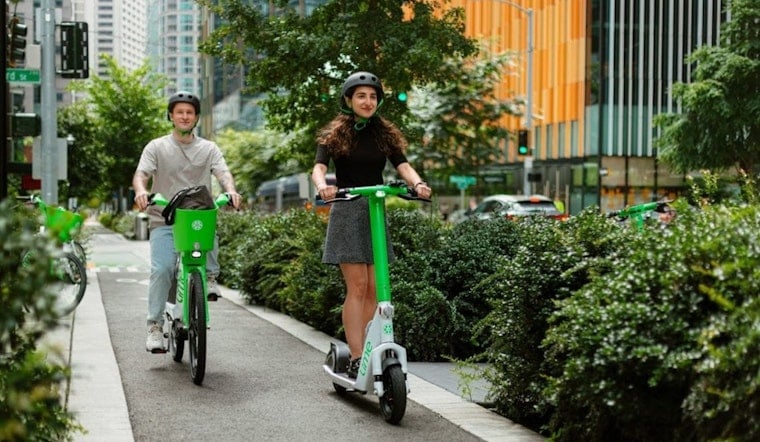
Seattle is sending a clear message to scooter riders: the sidewalk is not your lane. As dockless bikes and scooters explode in popularity, the city is turning to high-tech tools to keep them off the pavement and in the street.
The city’s shared bike-and-scooter program logged more than 10.5 million trips in 2025, and Harborview Medical Center treated 163 serious e-scooter or e-bike injuries in 2024. That combination of booming ridership and hospital visits set the stage for the latest rule change.
According to the SDOT Blog, the Seattle Department of Transportation updated operating permits on April 1 to require scooter and bike-share companies to add sensors and software that can detect sidewalk riding, skidding and other reckless behavior. Companies must install the tech on at least half their standing fleets by the second quarter of 2026 and on all devices by the end of the year, SDOT says.
Harborview’s injury numbers have helped drive the policy shift, and clinicians say many patients involved in serious crashes were not wearing helmets. UW epidemiology professor Steve Mooney, who has studied micromobility injuries, told KUOW that head trauma and falls remain common patterns among scooter and e-bike riders.
How the new sensors work
Manufacturers and operators say the new systems combine GPS, wheel-speed and motion data and, in some pilots, computer vision to figure out whether a device is on a sidewalk, in a bike lane or in the street, as reported by TechCrunch. The first line of enforcement is real-time feedback: audible beeps and in-app alerts that tell riders to get off the sidewalk.
If riders ignore those nudges, the software can trigger consequences such as speed caps or temporary account freezes. Seattle operators are already rolling out camera- and sensor-based systems, including Lime’s citywide Lime Vision retrofit, to flag sidewalk riding, according to GeekWire.
Why riders still choose sidewalks
Despite the rules, many riders still hop onto sidewalks when the street feels too risky. They often do it where bike lanes are missing or traffic feels especially tense, and behavior studies suggest that for some riders the choice can feel like a safety trade-off rather than a simple rule break.
Local reporting and hospital clinicians point to crowded streets, gaps in protected bike lanes and low helmet use as reasons sidewalk riding persists. Seattle’s earlier pilot data also found that a substantial minority of riders used sidewalks for parts of their trips, a pattern city planners now hope to change with a mix of new technology and better infrastructure, according to The Seattle Times.
What to expect on city streets
Under the updated permits, riders who keep pushing the limits after warnings can face tougher penalties, and operators can flag repeat offenders. Fines for improper parking and other rules violations have been raised in the permit language, and companies may suspend accounts for people who repeatedly break the rules.
SDOT is also installing more than 200 new downtown bike and scooter corrals ahead of the FIFA World Cup and says it helped partners distribute about 5,000 free helmets last year. The approach pairs behavior-detecting tech with more designated parking spots and expanded protected bike lanes to make staying off the sidewalk a more realistic option for riders, according to the SDOT Blog.
For riders, experts say the basics still matter: wear a helmet, choose protected bike lanes when you can and obey the app prompts. The city maintains a hub of information and helmet pick-up locations on the City of Seattle website, and operators have in-app guides and safety reminders built into their platforms.



