

























































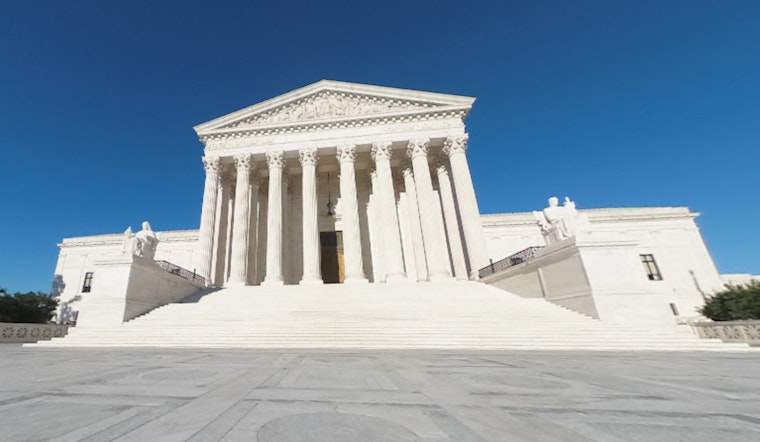
On Thursday, the Senate Judiciary Committee advanced two bipartisan measures that would put television cameras inside the U.S. Supreme Court and open the door to broader filming in federal courtrooms, sending both bills to the full Senate for consideration. The committee used voice votes, a quick procedural move that tees up a high-profile clash over how far Congress can go in telling the federal courts how transparent to be. Supporters are pitching the shift as a badly needed update for a camera-shy branch of government, while critics are warning about risks to jurors, witnesses and courtroom security.
The two measures, the Sunshine in the Courtroom Act (S.1133) and the Cameras in the Courtroom Act (S.1146), were moved out of committee and are now before the full Senate, according to Reuters. They take different routes: S.1133 would give presiding judges in federal courts discretion to allow photographing, recording and broadcasting, while S.1146 would tell the Supreme Court to permit television coverage of open sessions unless a majority of justices finds that doing so would violate due process, as reflected in the bill texts on Congress.gov and Congress.gov.
“The public has a right to observe the cases before the highest court, and these Supreme Court decisions have national importance, and they affect the lives of every American,” Sen. Chuck Grassley said in backing the effort, as reported by Reuters. Grassley, who chairs the Judiciary Committee, co-sponsored both measures. Sen. Amy Klobuchar is a lead co-sponsor of the Sunshine bill, underscoring the bipartisan flavor of the push. Committee leaders say the goal is simple enough on paper: let far more Americans follow court proceedings without having to snag one of the limited seats inside the room.
What the bills would do
The Sunshine in the Courtroom Act includes a three-year sunset that would force Congress to revisit and review how the experiment is working. It blocks media coverage of private bench conferences and requires protections to blur or disguise the faces and voices of jurors and vulnerable witnesses. The Cameras in the Courtroom Act would require the Supreme Court to allow televised coverage of sessions that are already open to the public, unless a majority of the justices decides that broadcasting a particular proceeding would violate due process, according to the Senate Judiciary Committee.
Why judges resist
Judges and federal court administrators have long warned that cameras can change how witnesses and jurors behave, threaten privacy and make security harder to manage. Those concerns are echoed in historical studies and in the judiciary’s own policy guidance. Congressional Research Service reporting on past camera legislation tracks that institutional skepticism and the mixed results from earlier pilot projects, highlighting the constant tug-of-war between transparency and fair trial protections, as detailed by the Congressional Research Service. Expect those long-standing worries to surface again when the full Senate takes up the bills and starts proposing amendments.
What comes next
With the committee’s vote, both measures are now eligible for floor debate, though no one is putting a firm date on when that might happen or what changes they might pick up along the way. The Judiciary Committee listed the camera proposals on its June 18 executive business agenda, according to the committee’s public calendar on its website. Even if one of the bills makes it to the president’s desk, the Supreme Court’s resistance to video coverage, set against its embrace of live audio during the pandemic, suggests there could be more legal and administrative wrangling before any cameras are actually rolling, as noted by SCOTUSblog.
Legal implications
Putting either bill into law would upend long-standing federal practice. New statutes authorizing cameras would have to mesh with Federal Rule of Criminal Procedure 53 and Judicial Conference guidance that traditionally limit or bar broadcasting from federal trial courts. That collision raises separation-of-powers and due process questions, along with the likelihood of litigation over how far Congress can go in reshaping courtroom procedure inside a separate branch of government. For now, senators and the judiciary are both watching to see how the coming transparency fight stacks up against worries about fair trials and the safety of everyone who steps into a federal courtroom.



