

























































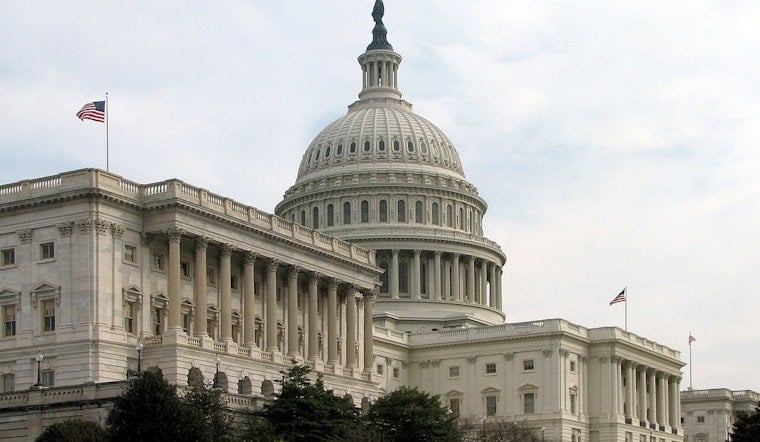
The U.S. Senate on Tuesday narrowly approved a war-powers resolution, voting 50-48 to direct the White House to end U.S. military action in Iran. The move amounts to a rare bipartisan rebuke of President Donald Trump and capped months of Democratic-led efforts to pull Congress back into the middle of decisions about the conflict.
How The Senate Voted
The 50-48 margin hinged on four Republican senators breaking with party leaders: Susan Collins, Lisa Murkowski, Rand Paul and Bill Cassidy, as reported by Reuters. According to the same reporting, it was the first time since the War Powers framework was enacted in 1973 that both chambers of Congress have passed such a resolution.
Two Republicans, including Senate Minority Leader Mitch McConnell, missed the roll call. Their absences left GOP leaders short of a blocking majority, according to AP.
What The Vote Does And Does Not Do
Despite the drama on the floor, passage in both chambers is largely symbolic. As a concurrent resolution, it is not sent to the White House for the president's signature and would not automatically force a withdrawal of U.S. forces.
The Washington Post details the long-running legal uncertainty around the 1973 War Powers Resolution and how much real bite these measures have. For added context, Hoodline's earlier coverage of the House vote on the same measure, including the House rebuke, traces how the fight built up before it reached the Senate.
Trump's Response
President Trump brushed off the Senate's move as "meaningless" while defending his Iran strategy at a Pennsylvania truck plant, where he also called for "100% nuclear inspections," FOX 9 Minneapolis‑St. Paul reported.
Later, he took to Truth Social and labeled the vote "poorly timed and meaningless," according to AP.
Political Fallout And Next Steps
The vote sets up a face-to-face clash in Washington. Trump was headed to Capitol Hill for a meeting with Republican senators while Democrats signaled they plan to keep forcing votes to try to rein in the administration, Reuters reported.
The showdown comes as the Pentagon seeks roughly $80 billion in supplemental funding tied to the Iran campaign, a request that could make it harder for the White House to argue that the resolution has no real-world impact.
Legal Questions
Legal scholars say how any of this would be enforced is far from clear. The White House contends that the War Powers process is constitutionally flawed and that concurrent resolutions carry no binding force without presidential approval.
The Washington Post notes that any attempt to test the issue, whether through a court fight or an effort to override a veto, would be both politically explosive and legally uncertain.




