

























































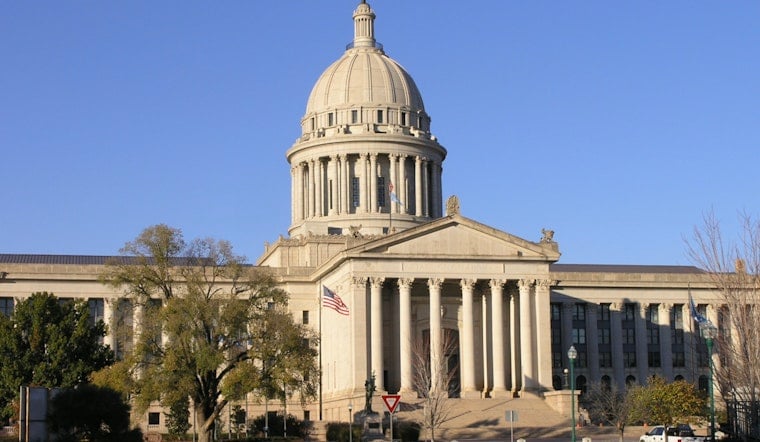
Oklahoma’s property tax fight officially landed in the state’s highest court on Tuesday, June 2, 2026, as justices weighed whether voters will even get a say on a citizen-driven plan to wipe out property taxes on owner-occupied homes. The Oklahoma Supreme Court met at the State Capitol in Oklahoma City to hear arguments that have quickly become a statewide tug-of-war over how to fund schools and local services.
What the proposal would do
The measure, known as State Question 843 and filed as Initiative Petition 455, targets the homestead exemption and phases it in over three years. The proposal would exempt 33% of a qualifying home’s assessed value in 2027, 66% in 2028 and 100% in 2029, effectively eliminating property taxes for owner-occupied homes once the schedule is complete. As outlined by The Oklahoma Constitution, the plan does not touch businesses or rental properties and it keeps in place bonded indebtedness approved before December 31, 2026. Backers say the idea offers badly needed long-term relief, especially for retirees and homeowners living on fixed incomes.
Supreme Court challenge and schedule
On Tuesday, the Oklahoma Supreme Court convened at the State Capitol to hear dueling legal theories about whether State Question 843 can move forward. Oral arguments were set for 10 a.m., according to Oklahoma Policy Institute. The case drew attention from local government leaders and school officials across Oklahoma, who see the dispute as reaching far beyond one tax exemption. Attorneys on both sides walked the justices through constitutional questions and real-world fallout if the proposal ultimately lands on a statewide ballot.
Projected revenue losses and local alarms
The Oklahoma Tax Commission’s fiscal analysis, reported by The Journal Record, projects steep revenue hits for counties and school districts if the measure takes effect. Local governments are expected to lose about $430.7 million in 2027, $959.6 million in 2028 and roughly $1.52 billion per year starting in 2029. Opponents say that kind of shortfall would almost certainly mean fewer dollars for classrooms, libraries, law enforcement and other basic services. Supporters respond that lawmakers at the Capitol could design replacement revenue streams, although critics note that no detailed backup plan has surfaced so far.
Politics, pushback and competing fixes
Inside the Legislature, some lawmakers are pushing narrower property tax tweaks instead of the sweeping homestead exemption plan. One Senate leader went so far as to label the citizen proposal “immature” because it does not spell out how to replace the lost revenue, according to Oklahoma Voice. County officials and legislative leaders warn the plan would push more of the tax load onto renters, businesses and farmers. Supporters argue the status quo has leaned on homeowners for too long and say this is the rare chance to deliver sweeping relief.
What happens next
The first hurdle is purely legal. If the Supreme Court signs off on the petition’s legality, organizers will have a 90-day window to gather signatures and must collect about 92,263 valid signatures to put the statutory change on a future ballot, according to The Oklahoma Constitution. If the justices agree with the protest and strike the petition, the measure stops there. Local coverage, including reporting by News On 6, has framed this week’s hearing as an early but pivotal sign of whether Oklahoma voters will ever get to weigh in on one of the most far-reaching tax ideas to hit the state in years.




