

























































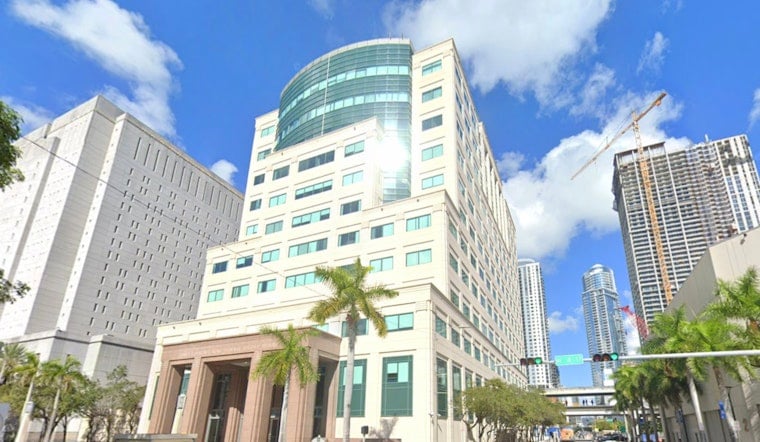
Federal prosecutors in South Florida say three noncitizens are now convicted after admitting they knowingly registered and voted in federal elections, a move that officials say cuts straight against the core rules of American democracy. The separate cases, all brought by the U.S. Attorney’s Office for the Southern District of Florida, involve defendants from Brazil, Haiti and Cuba. Prosecutors say each one falsely certified that they were eligible before casting ballots in contests that included races for president and the U.S. House of Representatives, at a time when federal authorities say they are ramping up enforcement of election-related crimes.
How the Cases Unfolded
According to a press release from the U.S. Attorney’s Office for the Southern District of Florida, Brazilian national Moises Lima Junior became a lawful permanent resident on Jan. 17, 2024, then registered to vote on Feb. 18, 2024, by falsely claiming U.S. citizenship. Prosecutors say he went on to cast a ballot in a federal election on Oct. 21, 2024. He pleaded guilty on Feb. 12 and was sentenced on May 27.
In a separate case, Haitian national Gordon Louis admitted that he knowingly voted in the 2020 general election for federal offices and entered a guilty plea. His sentence was entered on April 15.
Prosecutors say Cuban national Roberto Figueredo, whose resident status had been revoked and who was under a removal order, submitted a Florida voter registration form on Jan. 29, 2020, falsely certifying that he was a U.S. citizen. He then cast a ballot on Oct. 1, 2020. According to the same release, he pleaded guilty on Sept. 30, 2025, and was sentenced on Feb. 4.
Prosecutors’ Message
U.S. Attorney Jason A. Reding Quiñones used the announcement to underline how seriously his office views the charges. “Voting in federal elections is one of the most important rights and responsibilities of American citizenship,” he said in the statement, according to the U.S. Attorney’s Office for the Southern District of Florida. He added that federal law is clear that only United States citizens may vote in federal elections.
Prosecutors said their office is focused on protecting the integrity of federal elections and on holding accountable those they say undermine public confidence by knowingly misrepresenting their eligibility. The message between the lines: voting is not a “no harm, no foul” experiment for noncitizens.
Who Did the Digging
Homeland Security Investigations’ Miami and Fort Lauderdale offices led the investigations, with support from the U.S. Department of State Diplomatic Security Service and the Florida Department of Law Enforcement. Assistant U.S. Attorneys Christopher Killoran and Timothy Farina handled the prosecutions.
Local reporting from Tampa Free Press and El Nuevo Herald tracked the case timelines and confirmed the sentencing dates. Authorities and those outlets also noted that detailed sentence lengths were not disclosed in the public materials.
Part of a Wider Election Crackdown
The South Florida cases are not happening in a vacuum. Prosecutors have brought similar illegal voting and registration prosecutions in other parts of the country in recent months, as federal officials scrutinize suspected ineligible registrations and alleged false claims of citizenship.
Reporting by The Washington Post highlights comparable cases in other federal districts, pointing to a broader enforcement push aimed at policing the line between who can and cannot legally cast a ballot in federal races.
What the Law Says
Federal law bars noncitizens from voting in federal elections and makes it a crime to falsely claim U.S. citizenship in order to register or vote. The relevant provisions include 18 U.S.C. § 611 and 18 U.S.C. § 1015(f), as set out in the U.S. Code.
Convictions under these statutes can bring criminal penalties and, for noncitizens, may trigger serious immigration consequences such as removal or future inadmissibility, according to legal guides and case law. In other words, a single ballot can carry long-term fallout far beyond Election Day.
How to See the Case Files
Court records and dockets for these prosecutions are available through the U.S. District Court for the Southern District of Florida and via PACER, under the case numbers listed by prosecutors. For official filings, visit the Southern District of Florida court website.
Federal officials say these prosecutions are meant to deter intentional violations and shore up public confidence in how elections are run. Both the U.S. Attorney’s Office and local outlets have underscored that the cases involve defendants who, prosecutors allege, knowingly misrepresented their eligibility, rather than people swept up by clerical mistakes or confusing paperwork.


