

























































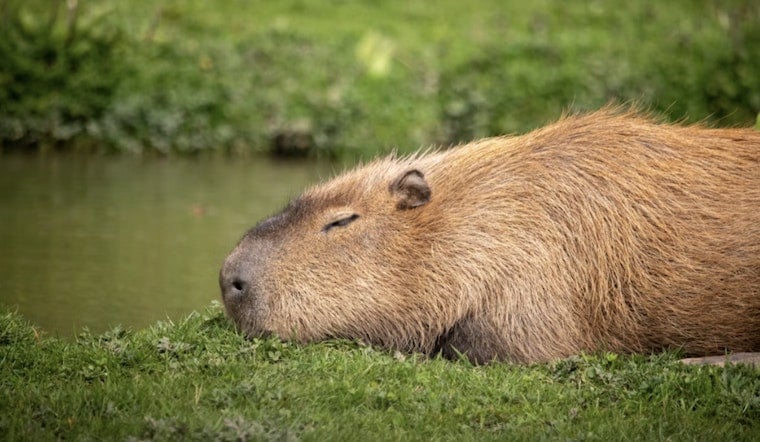
Last Wednesday, a Mission runner got a shock on his early-morning route when a capybara wandered out of the brush and started strolling along an irrigation canal. Javier Romero, 29, stopped and filmed the animal as it moved calmly about 10 feet from him before continuing on. The encounter, equal parts wildlife oddity and viral-ready footage, unfolded on a nature trail south of Interstate 2.
As reported by MySA, Romero captured still images and video that he later posted to Facebook. In the clip he can be heard exclaiming, "Hijole, su madre! Wow!" and then saying, "that is a capybara!" Romero told MySA he declined to pinpoint the exact trail location after people messaged him about capturing or harming the animal, and he said he has been in touch with a wildlife and exotic-animal expert about the sighting.
What Is a Capybara?
Capybaras are the world’s largest rodent and are native to South America, which helps explain why they favor rivers, wetlands and other watery habitats. According to Britannica, the species is semi-aquatic and commonly grazes along marshes and riverbanks. Their surprising calm around people and large size have made them internet curiosities as much as ecological subjects.
How Capybaras End Up In Texas
Wildlife watchers say most Texas sightings are isolated events tied to escaped or released exotic pets rather than a true range expansion. The Environmental Literacy Council notes that these occurrences are sporadic and typically involve single animals found near water, not established herds. State law generally allows private ownership of non-listed exotic animals, though local ordinances can add restrictions, per a recent legal review of Texas rules.
Southern Texas has seen mystery-animal moments before: parks officials debated a blurry trail-camera photo in 2023 that some commenters guessed might be a capybara or other exotic, per an earlier MySA report. That history has made some locals cautious about sharing precise locations when wildlife turns up on social feeds.
If You See One
Wildlife officials advise observing from a distance, not attempting to capture or feed the animal, and reporting sightings to authorities so trained staff can assess the animal’s health and origin. The Texas Parks and Wildlife Department is the appropriate agency to contact about non-native or nongame sightings, according to Texas Parks and Wildlife Department. Romero said he reached out to an exotic-animal specialist after his run, and the capybara’s welfare, not the internet fodder, now appears to be the top concern.
For now the capybara remains a one-off reminder that South Texas trails can deliver strange, memorable encounters. Runners in the Rio Grande Valley say they will keep their eyes peeled for whatever wanders out of the brush next.




