

























































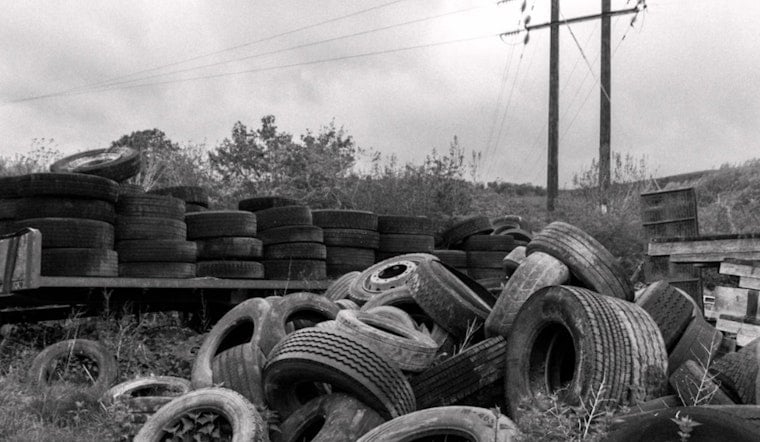
When Khanh Tran bought a fixer-upper in Southeast Portland this spring, he expected weekends of scraping paint and hacking back blackberry bushes. Instead, he ended up with a fortress of old tires encircling his new lot, turning a rehab project into a rubber-clad headache that now has multiple agencies circling and Tran wondering how he got stuck with the bill.
New Owner Finds Mountain of Tires
Tran invited reporters out to the property near Southeast 174th Avenue and Powell Boulevard, where what started as what he thought were a few dozen discarded tires has ballooned into a sprawling pile. He says the site had fewer than 40 tires in February, but by the weeks leading up to June 6, the stacks had multiplied into walls roughly six feet high, cutting off access to large sections of the 1.2-acre parcel.
According to KATU, at least one person appeared to be living on the property. Tran, who bought the lot in April planning to fix it up, says the tire mess was waiting for him when he came back ready to start work. Now, faced with a massive cleanup, he admits he has no idea how he will pay to clear the site.
Why Tire Piles Matter
State regulators are not casual about tire hoards. Oregon officials warn that unpermitted waste-tire piles are more than just an eyesore: water that collects in abandoned tires can turn into a mosquito nursery, and if a large pile ignites, it is notoriously difficult and dangerous to put out.
Oregon's Department of Environmental Quality points out that any facility or site storing more than 100 waste tires generally needs a DEQ permit, and that tire storage is treated as a regulated activity under state rules. For background on the regulations and the health and safety concerns tied to tire stockpiles, see Oregon DEQ.
Agencies Say Their Hands Are Tied
The Multnomah County Sheriff's Office has opened an investigation into possible trespassing and "offensive littering" tied to the site. The agency has also warned that the mountain of rubber "presents a fire hazard and could violate Oregon’s waste tire regulations."
Meanwhile, Metro's Regional Illegal Dumping program has its own battle with discarded tires, hauling away thousands from public areas across the region. KATU reports that crews collected more than 14,000 tires in the past year and about 5,600 in May alone. But there is a catch: Metro's RID teams are limited to public land, which means they cannot touch Tran's private property tire wall.
Cleanup Options And Who Pays
Local governments do have tools when a property crosses the line into public nuisance territory. Cities and counties can move to abate dangerous or unsanitary conditions and then try to recover the cost from whoever is legally responsible, including placing liens on a property to claw back cleanup expenses.
Portland's municipal code lays out summary-abatement powers and potential civil penalties for problem sites. Metro, for its part, offers a system for reporting dumped garbage and similar issues, though its crews still only collect waste from public spaces. For those looking to wade into the fine print, see Portland City Code and Metro.
Tran has launched an online fundraiser to try to cover the cost of hauling off the tires, while neighbors say they are worried that a tire fire could spread beyond the property line. For now, officials say the investigation will guide what happens next.
Anyone with information about the dumping is urged to contact the Multnomah County Sheriff's Office. Property owners dealing with illegal dumping or suspicious stockpiles are encouraged to review DEQ and city guidance on abatement and proper disposal. As for Tran, the dream of rehabbing his new place is on hold, buried behind stacks of rubber and a very practical question: "What can I do?"




