

























































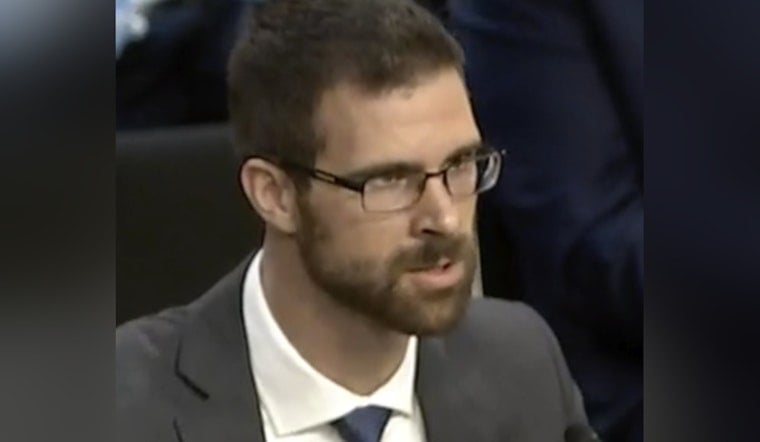
A federal judge in St. Louis has written that prosecutors may be able to seek the death penalty in certain sexual offense cases involving children, taking direct aim at a long-standing Supreme Court limit. U.S. District Judge Joshua Divine laid out the argument in a 23-page opinion in United States v. Moore, a case tied to federal charges against Anthony Moore, who has pleaded guilty to receiving child pornography and admitted sexual contact with a 13-year-old.
According to Reuters, Divine, a Trump appointee confirmed in 2025, wrote that the Supreme Court’s 2008 ruling in Kennedy v. Louisiana "does not prevent" a court from finding that the national consensus has shifted. He pointed to at least six states, including Florida, Tennessee, Idaho, Arkansas, Oklahoma and Alabama, that have enacted statutes his opinion says show changing legislative judgments about capital punishment for child sexual offenses.
Supreme Court Precedent Still Running the Show
In Kennedy v. Louisiana (2008), the Supreme Court held that the Eighth Amendment bars the death penalty for the rape of a child when the victim did not die, a ruling that has framed how lower courts limit capital punishment for non-homicide crimes. That decision remains the controlling law unless and until an appeals court or the Supreme Court itself revisits it. Courts assessing Eighth Amendment proportionality questions look to legislative trends and evidence of a "national consensus," as set out in Kennedy v. Louisiana.
The Moore Case and the Charges
Divine’s analysis comes in United States v. Moore, No. 4:25-cr-00103, in the U.S. District Court for the Eastern District of Missouri. Prosecutors say Anthony Moore pleaded guilty to receiving child pornography and admitted having sex with a 13-year-old. Reuters reports that, under that plea, he faced a maximum prison term of 20 years, yet Divine used the case to explore whether related capital exposure could be constitutionally permissible.
Federal Law and What Is at Stake
At the federal level, the death penalty applies only to crimes that Congress has specifically made death-eligible and is governed by the Federal Death Penalty Act and related statutes. The Congressional Research Service details how federal capital statutes and aggravating factors operate, and it notes that any attempt to expand death penalty exposure for non-homicide child sexual offenses would face significant statutory and constitutional hurdles.
Legal Implications and What Comes Next
Divine’s view is not binding outside his courtroom. Lower court rulings can be appealed to the Eighth Circuit and then to the Supreme Court, which would have to revisit or reaffirm Kennedy if a death sentence were sought in a case like this and then upheld on appeal. That path would invite competing briefs from prosecutors, defense lawyers and civil liberties groups over proportionality, legislative intent and whether the recent state-level activity really amounts to a national consensus.
For St. Louis, home to the Eastern District of Missouri, the opinion is a reminder that a single federal ruling can spark a national legal fight. For now, Kennedy remains the law of the land; how much influence Divine’s reasoning ultimately has will depend on whether higher courts embrace his analysis or double down on the 2008 limit.





