

























































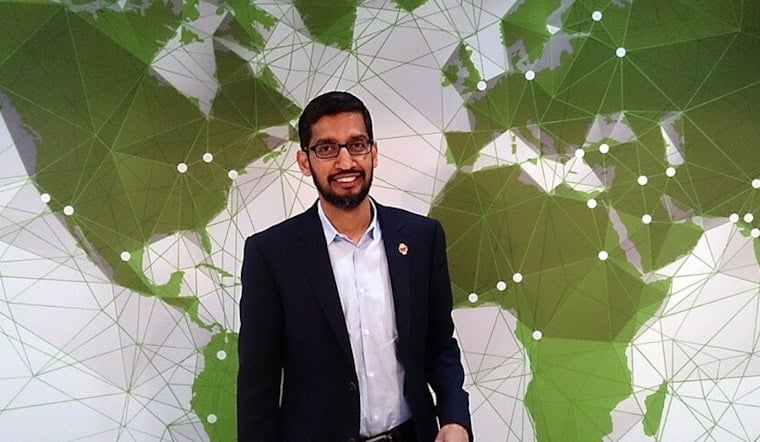
Google and Alphabet CEO Sundar Pichai came back to Stanford yesterday as the star of the university’s 135th commencement, addressing the Class of 2026 at Stanford Stadium. His speech leaned into optimism, personal anecdotes and real-world advice, steering clear of the hottest tech battles playing out on campuses. But only a few lines into his remarks, a visible group of graduates stood up, turned away and headed for the exits.
Students Target Google Ties To Israel
The walkout was organized by campus groups protesting Google’s work with the Israeli government, specifically Project Nimbus. Around 200 students filed out just as Pichai took the stage, while scattered groups in the crowd stayed put and waved banners, blew whistles and raised Palestinian flags, according to SFGATE. Project Nimbus, a roughly $1.2 billion cloud-computing deal that connects Google and Amazon with Israeli government agencies, has been a flashpoint for years of internal dissent and public protest, as detailed by Al Jazeera.
What Pichai Said and Skipped
Pichai tried to keep things grounded and practical. He told graduates to run their choices through three filters: choose optimism, take on hard problems and follow what genuinely excites them. AI, the topic many expected him to dwell on, got only a light touch. He joked that it is simply the last two letters of his last name, according to the full transcript posted by Google.
Stanford President Jonathan Levin introduced Pichai as one of the school’s own, pointing to Pichai’s master’s degree from Stanford and framing the day as a kind of homecoming, per the Stanford Report. The contrast between that warm welcome and the students filing out of the stadium was hard to miss.
People's Commencement and Campus Climate
Many of the graduates who walked out did not just call it a day. They regrouped elsewhere on campus for a separate “People’s Commencement,” an annual alternative ceremony that organizers say is meant to spotlight demands and perspectives the official program ignores. That event featured activist Mahmoud Khalil as a keynote speaker and echoed the same criticisms of Project Nimbus, according to SFGATE. Organizers told The Mercury News that recent graduates, including Eva Jones, played key roles in pulling the event together.
Protests Have a Recent History
The walkout did not come out of nowhere. It is part of a year of sustained activism at Stanford over Israel and Gaza. In June 2024, a sit-in at the president’s office ended with police moving in and multiple arrests. Prosecutors later brought felony vandalism and related charges against a dozen people, according to the Los Angeles Times. Those cases, and the images of students being detained on campus, have lingered in the background of big public moments like commencement.
Federal Scrutiny Looms
Stanford is also on the radar in Washington. The university was among those that received warning letters from the U.S. Department of Education’s Office for Civil Rights, part of a wider federal review of antisemitic harassment and discrimination on campuses. A March 10, 2025 press release lists Stanford as one of 60 institutions under investigation or monitoring under Title VI, a reminder that campus turmoil can carry regulatory consequences, according to the Department of Education.
After the walkout and the off-site ceremony, Pichai stayed on script and finished his address, receiving scattered applause and the usual lineup of handshakes. The full text of his remarks is available from Google. For many in the stadium, the day drove home an uncomfortable truth: the global controversies swirling around big tech do not pause for graduation day.





