

























































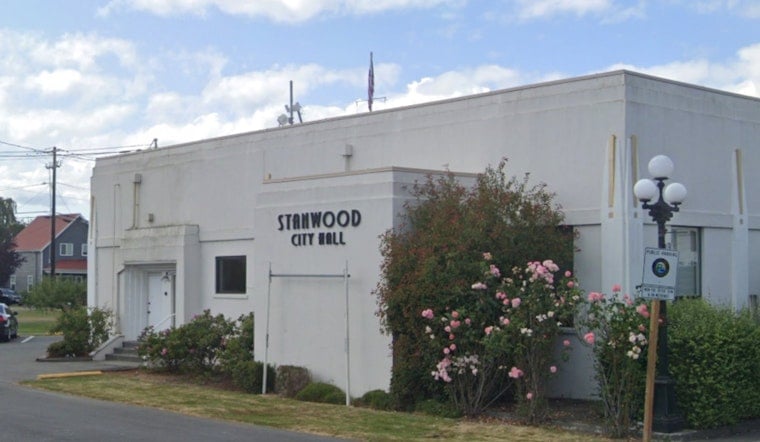
Stanwood voters are being asked to sign off on a small but symbolic sales-tax bump this August: a one-tenth of one percent public-safety increase, which works out to about 10 cents for every $100 spent. City officials say the proposal is aimed at keeping up with rising costs for policing, courts and jail services while holding the line on current service levels. If approved, the measure would nudge Stanwood’s sales tax from 9.3% to 9.4%, with revenue expected to start showing up in 2027.
The Stanwood City Council voted on April 23 to place Proposition No. 1 on the August primary ballot, according to a City of Stanwood notice. The city projects the 0.1% public-safety sales-and-use tax would generate about $300,000 a year starting in 2027, giving officials some breathing room to consider expanding the police force. Councilmembers opted for a sales tax instead of a property-tax hike so that residents, visitors and businesses all share the burden, the city explains.
Local coverage has spelled out why city leaders say they need the money. Stanwood’s contract with the Snohomish County Sheriff’s Office has more than doubled since 2011, and overall public-safety costs — including policing, dispatch, courts, prosecution, public defense and jail services — have climbed from roughly $1.6 million to about $3.1 million, HeraldNet reported. Over roughly the same period, Stanwood’s population has grown from about 6,220 residents to more than 9,000, while the number of law-enforcement officers has stayed near 10. Councilmembers at the April meeting said they wanted voters to make the call and argued that the sales tax would help the city plan ahead instead of scrambling during budget season.
What the law allows
Stanwood is tapping a relatively new option in Washington law. Cities and counties can now adopt a 0.1% public-safety sales-and-use tax that comes paired with a state grant program for eligible agencies, according to the Washington State Criminal Justice Training Commission. The statute limits how the money can be spent, restricting it to criminal-justice and public-safety uses such as hiring and training officers, behavioral-health co-response programs, and support for courts and public defense.
The law also builds in reporting and accountability requirements for jurisdictions that collect the tax. Contract cities like Stanwood, which rely on sheriff’s offices or other agencies for police services, have a special attestation process to show they qualify under the program.
Where Stanwood fits
Stanwood is hardly alone in eyeing the 0.1% tool. Around western Washington, several cities and counties have moved this year to add the public-safety levy in hopes of stabilizing court and law-enforcement budgets. Pierce County’s new "Justice Fund" is expected to bring in about $27 million annually, according to Pierce County, and other cities, including Lynnwood, have approved similar taxes, HeraldNet reported.
Supporters argue that the extra sales-tax slice helps prevent cuts to patrols, courts and support services, and can shore up staffing that has not kept pace with growth. Critics counter that sales taxes are regressive, hit lower-income shoppers harder and shift more of the cost of public safety to people at the checkout counter.
Next steps
Stanwood’s Proposition No. 1 will appear on the August 2026 primary ballot, with collections slated to begin in 2027 if voters approve, according to the city. Residents who want more detail can review the City of Stanwood’s Proposition No. 1 materials or contact City Hall for copies of the council resolutions and budget documents laying out the proposal.




