

























































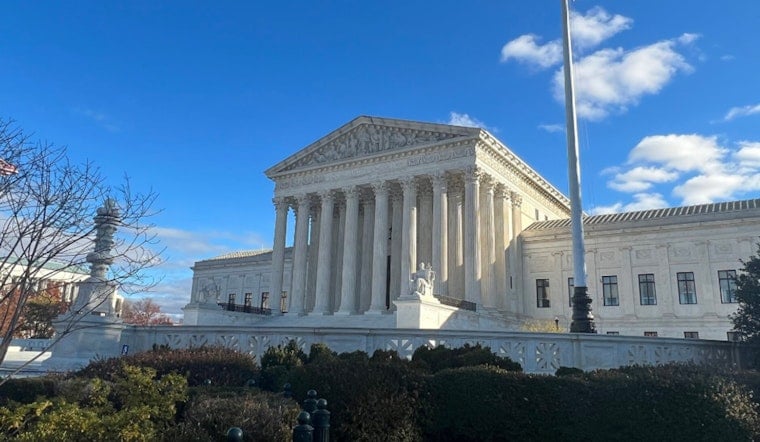
The U.S. Supreme Court on Tuesday gave ExxonMobil the green light to press ahead in American courts against Cuban state-owned companies over property seized after Fidel Castro’s revolution. The ruling breathes new life into a decades-long dispute over who, if anyone, has to pay when foreign governments nationalize American-owned assets.
In a 6-3 decision, the Court reversed a lower ruling that had treated the Cuban companies as immune from suit, according to The Associated Press. The majority held that the civil-remedy provision Congress added in 1996, known as Title III of the Helms‑Burton Act, can remove that immunity in these kinds of cases.
How this fits into the recent push over Cuban claims
The decision comes on the heels of a May ruling in which the Court revived trafficking claims tied to Havana’s docks, signaling a broader willingness to put Helms‑Burton to work against private actors that use confiscated property. As SCOTUSblog explains, the two back-to-back decisions involve related questions about whether Title III itself cuts through foreign sovereign immunity or whether plaintiffs must also fit their cases into exceptions under the Foreign Sovereign Immunities Act.
The assets at the center of Exxon’s lawsuit go back to Standard Oil’s pre‑revolution footprint in Cuba, including a refinery, terminals and more than 100 service stations that Exxon says were taken in 1960. The U.S. Foreign Claims Settlement Commission valued Exxon’s loss at $71.6 million in 1969 and applied 6% annual interest beginning in 1960, a figure that The Associated Press notes would come to roughly $3 billion today, even before potential trebling under the statute.
Title III, part of the 1996 Helms‑Burton (LIBERTAD) Act, gives U.S. nationals a private right to sue anyone who “traffics” in property confiscated by the Cuban government, as summarized by the Legal Information Institute. For years, presidents routinely suspended that private right, effectively putting Helms‑Burton on ice until the Trump administration let it take effect on May 2, 2019, a shift documented by the Congressional Research Service.
Legal implications
Lawyers say the ruling lowers the barriers for U.S. claimants to sue foreign entities that do business on confiscated property, without first threading the needle of FSIA exceptions, which widens the real-world reach of Helms‑Burton. As Sullivan & Cromwell and other firms have observed, that shift could trigger a new wave of trafficking claims and make cross‑border deals involving Cuban assets significantly more complicated.
What happens next
The Supreme Court’s ruling clears away the immunity defense, but it does not decide how much money, if any, Exxon will ultimately collect. The case now heads back to the lower courts for fact‑finding and potential trials or settlements. Legal analysts at firms such as Steptoe caution that even victorious plaintiffs can struggle to enforce judgments against foreign state entities in practice.
Local fallout in Miami and beyond
In Miami, where heirs, plaintiffs’ lawyers and tourism operators track Cuba litigation almost like a local sport, the decision could reshape settlement talks and insurance calculations. As reported in Miami heirs quietly score in Cuba property fight and in local coverage such as WKMG/ClickOrlando, some defendants have recently chosen to settle Title III claims rather than risk creating new precedent at trial.
For now, the ruling is set to ripple through courtrooms and diplomatic channels alike. Judges will sort out who can recover and in what amounts, while any business that touches Cuban-linked assets will be revisiting its risk profile. Expect fresh lawsuits, tougher bargaining and a string of lower‑court decisions in the months ahead.





.jpg)