

























































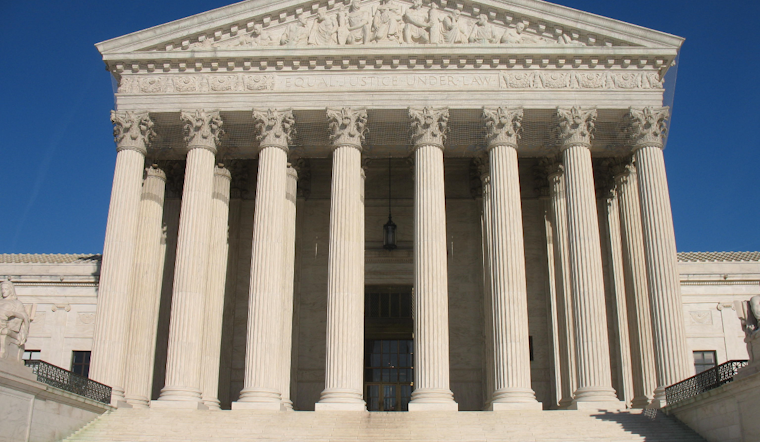
The U.S. Supreme Court on June 18, 2026, split 5-4 and ruled that a Maryland woman identified only as T.M. cannot pursue a federal lawsuit to overturn a state-court consent order tied to her involuntary hospitalization and forced medication. The decision maintains a narrow reading of the Rooker-Feldman doctrine and will often leave lower federal courts on the sidelines while state appeals are still working their way through the system.
Justice Sonia Sotomayor wrote the majority opinion, concluding that federal district courts lack jurisdiction when a plaintiff is effectively asking a lower federal court to review and reject a state-court judgment. According to the Legal Information Institute, the Court affirmed the Fourth Circuit's dismissal and warned that opening the door to federal review during active state appeals would create "anomalous outcomes" and undercut basic federalism principles.
The conflict traces back to March 2023, when T.M. says she suffered a psychotic episode after ingesting gluten and was taken to the emergency room at Baltimore Washington Medical Center, where she was held involuntarily for about three months. While she remained hospitalized, a clinic review panel signed off on forcible injections of antipsychotic medication, and on June 12, 2023, a state judge entered a consent order that secured her release but required dismissal of her pending actions. Ten days later, T.M. filed a new federal suit claiming that she had agreed to the order under duress and asking a federal court to block its enforcement, as reported by the Maryland Daily Record.
What the ruling means
The decision resolves a split among federal appeals courts by spelling out that Rooker-Feldman applies even when a state-court judgment is still open to further review in the state system. The Court treated T.M.'s federal complaint as a direct attack on the state consent order, something it described as an exercise of appellate power that Congress has not given to federal district courts, which have only "original" jurisdiction. The justices also made clear that statutory carve-outs such as habeas remain available, as explained in the Supreme Court opinion.
Dissent raises alarms
Justice Amy Coney Barrett, joined by Chief Justice John Roberts and Justices Elena Kagan and Neil Gorsuch, dissented, warning that the majority had expanded Rooker-Feldman in a way that could tempt lower courts to use it as a "docket-clearing workhorse." The dissent argued that more traditional tools, such as abstention and preclusion doctrines, are better suited to prevent inappropriate federal interference with ongoing state cases, according to the Supreme Court.
Amici and local stakes
The case attracted significant amicus attention from both legal and medical organizations. The Supreme Court docket lists briefs from the American Medical Association and MedChi urging tight limits on parallel federal suits. At the same time, civil-liberties and legal-reform groups, including the Institute for Justice and the Constitutional Accountability Center, filed briefs backing T.M. Taken together, the filings highlight how the ruling could shape hospital-liability and patient-rights litigation in Maryland.
Where this leaves Maryland patients and courts
For Maryland litigants, the ruling means that federal courts will often be closed to challenges that aim to unravel state-court judgments until state avenues are fully exhausted. The Court noted that Congress has allowed limited federal review in areas such as habeas corpus, but otherwise federal power to vacate state judgments is sharply constrained, as reflected in the Supreme Court opinion. In practical terms, T.M.'s federal case remains shut down unless and until the state courts issue a new judgment that can be separately reviewed.





