

























































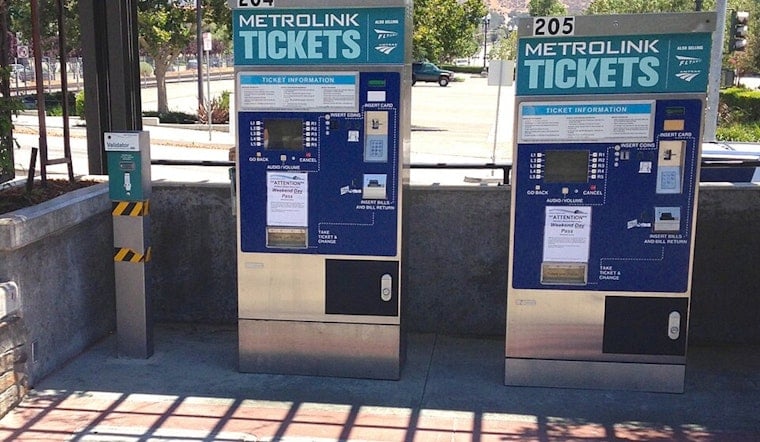
Metrolink riders on the San Bernardino Line and Arrow service can now skip the ticket machines and app screens, at least for a while. The agency has rolled out a six-month contactless payment pilot that lets passengers tap credit and debit cards, mobile wallets or wearables at station validators instead of buying traditional tickets. Fares are calculated by distance in a pay-as-you-go system, with daily caps that keep costs predictable at $15 on weekdays and $10 on weekends. Agency officials say the timing is aimed at handling heavier travel during FIFA World Cup 2026 and gathering rider feedback on whether this contactless setup should go systemwide.
According to Metrolink, the tap-on and tap-off demonstration is now live between Los Angeles and Redlands and will run for six months while the agency collects operational data. “The timing of this pilot couldn’t be better, as Southern California prepares to welcome the world over the next 39 days,” Metrolink Board Director and Pomona Mayor Tim Sandoval said. The agency is pitching the option as a simpler, pay-as-you-go choice for new and visiting riders on match days and during fan events.
How the Pilot Works
Riders tap a contactless card or mobile wallet at a validator before boarding, then tap again when getting off, so the system can calculate a distance-based fare. They have to use the same card or device for both taps so the trip can be completed correctly. As reported by Pasadena Now, anyone who forgets to tap out is charged $10.50, which is the San Bernardino Line’s maximum one-way fare. During the pilot there are no day passes, monthly passes, discounts, free transfers or loyalty rewards in the contactless system, and tap-to-pay is only available at eligible stations on the San Bernardino Line and Arrow service.
Fares, Caps and Payment Methods
According to Metrolink, accepted payment methods include Visa, Mastercard, Discover and American Express, along with Apple Pay and Google Pay, and the system may put a temporary hold on the account until final fares are settled. The agency says daily fare caps are set so riders do not pay more than the equivalent SoCal Day Pass in a single day, which is meant to give both match-day visitors and regular commuters some price certainty. If a validator is not working, or if a trip involves transfers to other Metrolink lines, riders are advised to buy a ticket through the Metrolink app or at a station machine to avoid incomplete-trip charges.
Why the Timing and Who’s Paying
Regional planners are helping cover the cost of the test. The Southern California Association of Governments says it provided about $2.8 million from REAP 2.0 and the Carbon Reduction Program to try out open-loop contactless payments on these corridors. SCAG has framed the pilot as part of a broader effort to modernize transit ahead of mega-events such as FIFA World Cup 2026 and the 2028 Olympics. State and local partners say that making payment simpler can lower barriers for visitors and help ease congestion when big crowds roll into town.
Tips for Riders
Travelers should keep the specific card or device they plan to use handy for both the tap-in and tap-out, and remember that each rider needs their own contactless payment method or a separate ticket from a machine or the app. Pasadena Now notes that mixing payment methods on a single trip is treated as multiple incomplete trips, which can lead to several maximum fares being charged. Anyone who needs transfers, discounts or loyalty rewards should stick to traditional Metrolink tickets for now, since those features are not part of the pilot.
Metrolink says it will lean on rider feedback and operational data from the six-month demonstration to decide whether contactless payments should expand across the system. Riders are encouraged to confirm station eligibility and review the latest instructions before traveling so they do not get hit with an incomplete-trip charge.





