

























































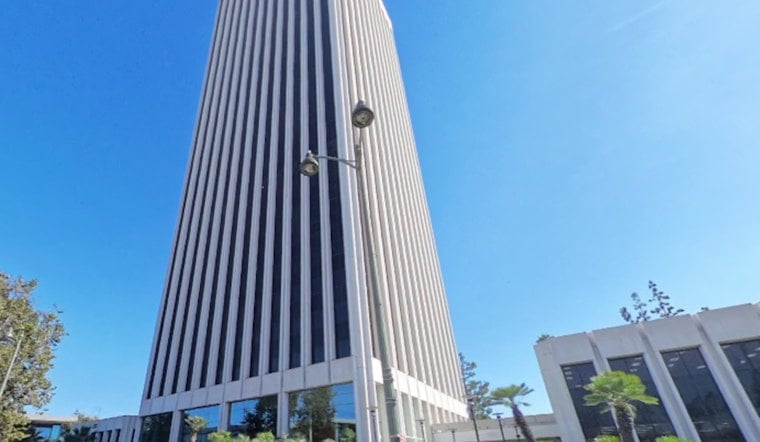
MetLife is hauling a high-profile Miracle Mile dispute into court, asking a judge to put Rockpoint’s 31-story Wilshire Boulevard office tower into receivership after alleging the Boston-based owner defaulted on an about $164 million loan. The insurer says Rockpoint refused to repay roughly $2 million that MetLife advanced in April to cover property taxes. If a judge signs off, the roughly 450,000-square-foot tower would be run under court oversight instead of by its current owner.
In a complaint filed in early June, MetLife alleges the borrower “failed and refused to do so” after being given until April 28 to repay the protective advance and warns it will pursue foreclosure if the debt is not cured, according to The Real Deal. The filing pegs the note at roughly $164 million, with a fixed interest rate of about 3.50 percent and a default rate near 7.50 percent; the note comes due in 2030.
Rockpoint bought the property in 2020. County sales records put the price at about $303.4 million, while local trade coverage at the time reported the deal nearer $312 million, per the Los Angeles Business Journal. Contemporary reporting cast the building as a trophy Wilshire holding across from LACMA, a kind of Miracle Mile calling card.
What a receiver would do
If the court agrees with MetLife and appoints a receiver, a court-selected fiduciary would step in to run the show. That means taking control of day-to-day operations, collecting rents and paying the bills to preserve the asset for lenders and other creditors. Judges typically customize a receiver’s powers to the case at hand, and receivers operate as officers of the court with authority to stabilize, operate or even market property as needed, according to legal guides. Lexology notes that receiverships are a standard tool to protect collateral and creditors’ interests when a loan relationship goes sideways.
Wider pressure on Wilshire
MetLife’s move is not happening in a vacuum along Wilshire. Onni Group’s roughly $408 million loan on the Wilshire Courtyard office campus was shifted into special servicing earlier this year after servicer notes flagged an imminent monetary default, according to Commercial Observer. While that financing is separate from Rockpoint’s tower, the stress points line up, highlighting how lenders are keeping a much closer eye on collateral across Miracle Mile as office demand softens.
What comes next
MetLife’s complaint says the lender will start a nonjudicial foreclosure if the protective tax advance and related defaults are not cured, and both MetLife and Rockpoint declined to offer fresh comment when asked, per The Real Deal. In California, a nonjudicial foreclosure under a deed of trust can move more quickly than a court-supervised sale, although statutes and case law layer in specific procedures and limits, as explained by Nolo.
For now, the receiver request is an opening salvo in a process that could end in a managed sale, a foreclosure or a workout behind the scenes. Tenants, lenders and neighborhood stakeholders will be watching the docket to see whether a receiver gets installed or the parties find a way to patch things up. Either way, the dispute adds one more data point to a clear trend in Los Angeles offices: big lenders are increasingly ready to use legal remedies to protect their stakes when marquee properties hit a rough patch.





