

























































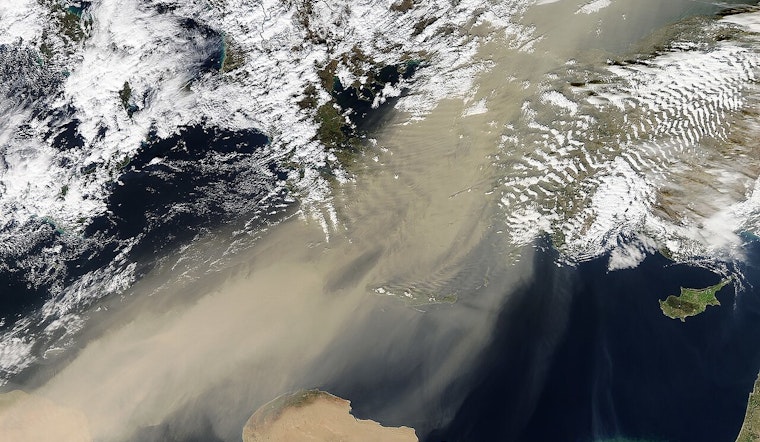
Saharan dust is back over Texas as of Friday, June 5, 2026, draping the sky in a milky haze that could make sunsets pop while nudging air-quality readings into the moderate range. For most people it is more of a cosmetic filter than a crisis, but anyone with asthma, COPD or other breathing problems could see symptoms ramp up.
Forecast maps show the dust plume arcing from the west coast of Africa across the North Atlantic toward the Caribbean and the northern Gulf of Mexico, according to the Copernicus Atmosphere Monitoring Service. CAMS forecasts and animations indicate the dust has been marching west since late May and may hang around the Gulf Coast through the weekend.
The mass of hot, dry, dust-laden air, known as the Saharan Air Layer, routinely crosses the Atlantic in late spring and summer and can put a lid on tropical storms by parking dry air aloft and increasing mid-level wind shear, experts say. NOAA's Atlantic Oceanographic and Meteorological Laboratory notes that the SAL often sits a couple of miles above the surface and can even tone down afternoon thunderstorms when it drifts over the Gulf Coast.
“Tiny mineral particles can enter the eyes, nose and lungs and mimic allergy symptoms,” Dr. John Villacis, an allergist at St. David’s North Austin Medical Center, told KXAN, adding that the dust can trigger asthma and COPD flare-ups and that ordinary allergy pills do not always stop those reactions. Scientific reviews link trans-Atlantic dust events with more respiratory irritation and hospital visits for lung conditions, and researchers have documented associations between Saharan dust and worsened asthma and COPD outcomes. Medical literature summarizes those health risks.
How to protect yourself
If you are sensitive to particles, this is a good weekend to dial back outdoor time, run air conditioning on recirculate, use a HEPA filter indoors and keep quick-relief inhalers close. You can check the current Air Quality Index for your neighborhood at AirNow and follow local health guidance. The CDC and NIOSH recommend NIOSH-approved particulate respirators (N95 or P100) for people who have to be outside in dusty conditions, while noting that respirators must fit properly and are not appropriate for everyone. For practical advice on when and how to use respirators, see guidance from CDC/NIOSH.
What it means for storms and sunsets
Because the SAL brings warm, dry air aloft, forecasters say an early-season plume can make the atmosphere less friendly to tropical development for several days to about a week. NOAA also notes that when the dust stays high in the atmosphere, the most noticeable local effects are hazy skies at midday and especially colorful sunrises and sunsets. Satellite imagery from NASA shows how the particles scatter sunlight and add extra tint to dawn and dusk.
Texans with ongoing respiratory problems should keep an eye on local forecasts and the AQI, and contact a doctor if they develop wheezing, shortness of breath or chest pain. For Texas-specific daily air forecasts and particle pollution outlooks, see the Texas Commission on Environmental Quality. TCEQ posts region-by-region PM2.5 and PM10 outlooks that show whether the plume is expected to push pollution into unhealthy ranges.





