

























































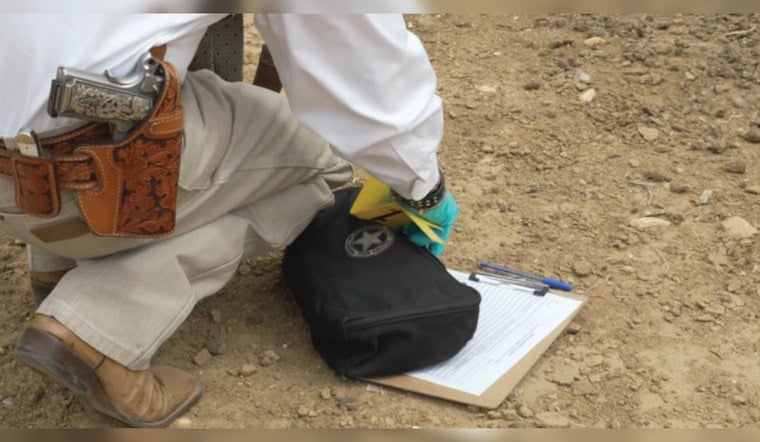
The Texas Rangers’ cold case team just got a serious boost. On Wednesday, the Texas Department of Public Safety (DPS) announced a major expansion of the Rangers’ cold case unit, adding investigators and support staff across the state to speed up investigations into unsolved murders and sexual assaults. The revamp will put more dedicated cold case Rangers in each of the agency’s six company areas and increase supervisory muscle to match.
According to the Texas Department of Public Safety, legislative funding from Senate Bill 1 allowed DPS to grow the Unsolved Crimes Investigation Program to 17 Rangers and three support staff, which roughly doubles the unit’s size. The agency says one additional cold case Ranger will be assigned to each of the six Ranger companies, and a second staff lieutenant will help oversee the larger team. Word of the expansion first surfaced in a TxDPS South Texas Region post on X.
“As forensic science and technology continue to advance, so will our ability to make a bigger impact in our state,” Texas Ranger Division Chief Scotty Shiver said, in remarks published by DPS. The release reports that the program has helped solve more than 300 cold cases, including over 156 sexual assaults, since the Sexual Assault Kit Initiative (SAKI) program began, and says the added personnel will give investigators more time to run down long-dormant leads.
How SAKI fits
The expansion dovetails with the U.S. Department of Justice’s Sexual Assault Kit Initiative, which supplies investigative grants and advanced testing for older sexual assault cases. SAKI lists multiple awards to Texas DPS, including $1.5 million in FY 2023, to support DNA collection, testing, and follow-up casework. That funding has helped agencies reopen and move forward cases that previously lacked the resources for modern forensic testing.
Why it matters
The staffing increase lands at a time when states and agencies are under pressure to clear DNA and rape kit backlogs and to lean into tools like forensic genetic genealogy that can generate leads decades after a crime. Federal money aimed at backlog reduction recently flowed to DPS. Sen. John Cornyn’s office announced an award of roughly $2.79 million to help reduce the state’s DNA testing backlog. Prosecutors and victim advocates say that pairing more investigators with expanded lab capacity can shorten the time between a DNA match and an arrest in long-running cases.
How to help
As part of its public awareness push, DPS spotlights one featured cold case every two months and increases Crime Stoppers rewards tied to that case. Local reporting notes that the higher reward for a featured case can reach $6,000. Community members with tips can report confidentially through iWatchTexas or by calling Crime Stoppers at 1-800-252-TIPS, according to local coverage. Officials say public tips remain one of the most important tools for breaking decades-old cases wide open.





